
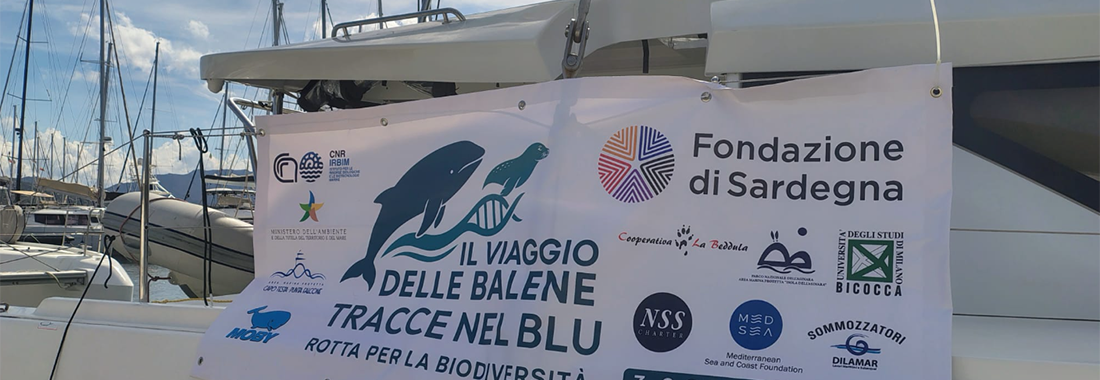
Tracce nel Blu – Route for Biodiversity has set sail: the 2026 scientific expedition of Il Viaggio delle Balene, dedicated to cetacean monitoring, Mediterranean monk seal research through environmental DNA, and the study of microplastics along the coasts of Sardinia. Conceived by Cooperativa La Beddula in collaboration with the Capo Testa – Punta Falcone Marine Protected Area, the expedition brings together researchers from MEDSEA Foundation, the University of Milano-Bicocca and CNR-IRBIM.
For MEDSEA, the mission is a new opportunity to collect data on the presence and behaviour of cetaceans in Sardinian waters and to contribute to an increasingly integrated understanding of marine biodiversity.
MEDSEA’s contribution: observing and listening to cetaceans
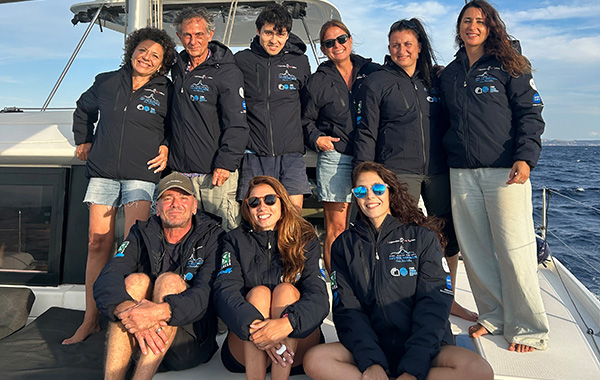
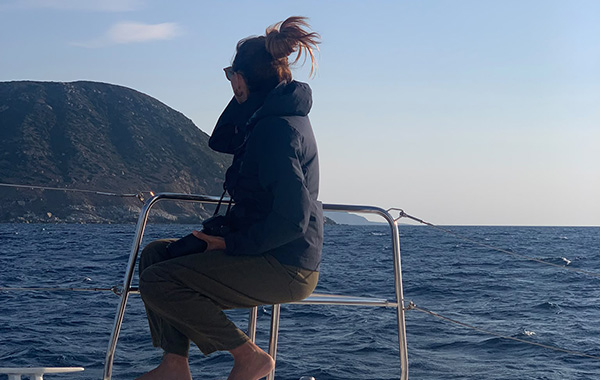
During the expedition, MEDSEA is responsible for cetacean monitoring through visual observations, photo-identification and acoustic recordings using a hydrophone, including during night-time operations. On board, MEDSEA marine biologists Lara Carosso and Michela Congiu are carrying out monitoring and photo-identification activities.
The work on cetaceans is integrated with the mission’s two other research strands: the University of Milano-Bicocca is monitoring the Mediterranean monk seal through environmental DNA (eDNA) at 21 coastal sampling stations, while CNR-IRBIM is analysing microplastics at 10 stations, with samples collected both at the surface and at a depth of 10 metres.
Three research strands following the same route, giving meaning to the name Tracce nel Blu – Traces in the Blue: visual and acoustic traces of cetaceans, genetic traces of the Mediterranean monk seal, and traces of human pressure represented by microplastics.
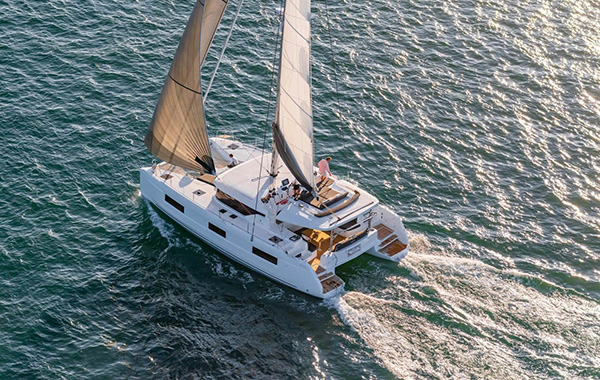
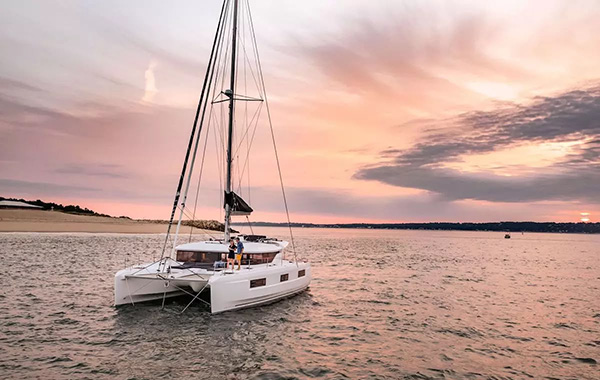
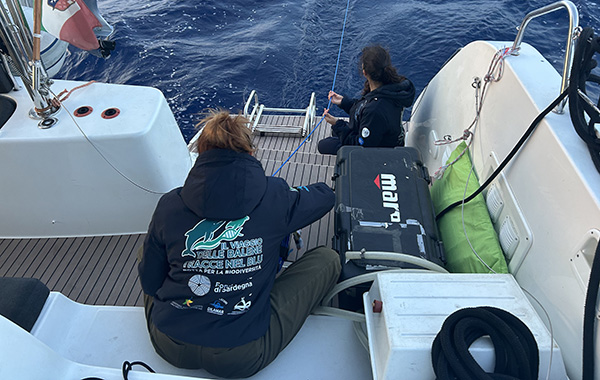
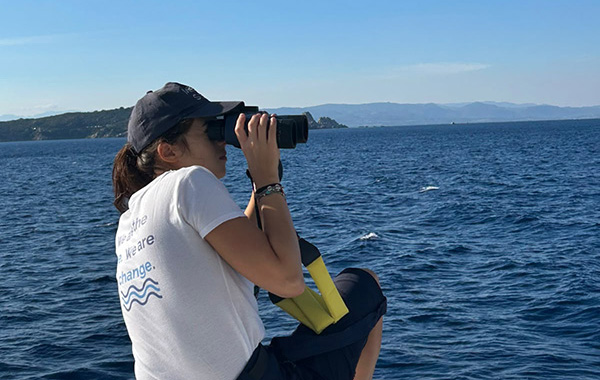
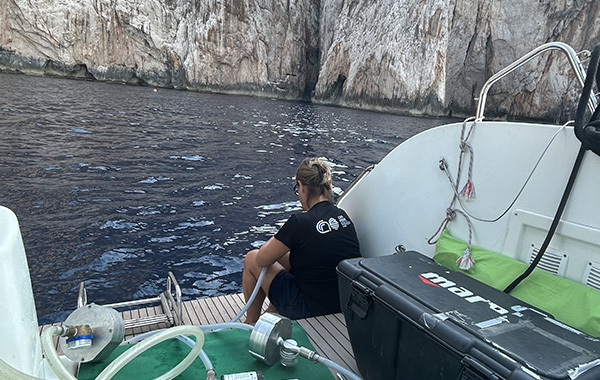
A route for Sardinia’s biodiversity
After departing from the north-east of the island, the team reached the Capo Testa – Punta Falcone Marine Protected Area, where the first eDNA and microplastics samples were collected. The expedition then continued towards the Asinara Island Marine Protected Area, Argentiera and the Porto Conte Regional Natural Park – Capo Caccia – Isola Piana MPA, before heading further south.
The aim is to create an ideal blue thread connecting Sardinia’s Marine Protected Areas, linking scientific research, biodiversity and local territories.
The expedition builds on the work started in 2025 with Onda Vita, when the team sailed for more than 300 nautical miles between Sardinia and Corsica over five days, carrying out 68 hours of integrated monitoring. The previous expedition recorded 52 events of intense biological activity, 18 acoustic detections of sperm whales, sightings of bottlenose and striped dolphins, and three positive Mediterranean monk seal eDNA samples.
From the sea to the data
At the end of the mission, the work will feed into three main outputs: a report on cetacean sightings and acoustic recordings, a georeferenced map of Mediterranean monk seal eDNA signals, and a qualitative and quantitative analysis of microplastics. Once validated, the datasets will contribute to scientific knowledge and may support future marine management and conservation actions.
The expedition is being carried out in collaboration with the Capo Testa – Punta Falcone Marine Protected Area and the Asinara National Park – Asinara Island Marine Protected Area, with the support of Fondazione di Sardegna, NSS Charter, Moby Traghetti and Sommozzatori Dilamar.