
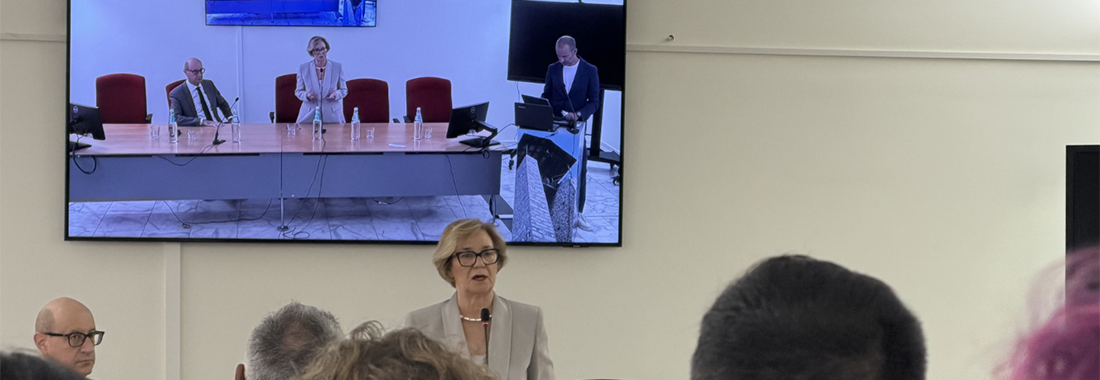
Final results of the European NaTour4CChange project presented in Cagliari. Leonardo Lutzoni, Director of the Tavolara – Punta Coda Cavallo Marine Protected Area, presented the local climate adaptation plan and the three nature-based solutions selected for the area, with Cala Brandinchi identified as the priority intervention site. Alongside environmental measures, the MEDSEA Foundation developed a marketing and communication strategy to engage visitors and tourism operators in strengthening the destination’s climate resilience.
NaTour4CChange: Project Results Presented in Cagliari
From understanding climate risks to identifying solutions to protect coastlines, while introducing a new approach to tourism communication. This is the path outlined by the European NaTour4CChange project, whose results were presented on 8 October 2026 in Cagliari during the event “Climate Change Adaptation in Coastal Tourism: The NaTour4CChange Project Experience”, organised by the Autonomous Region of Sardinia at the “Grazia Deledda” Regional Library.
The event marked a concluding opportunity to present the work carried out to integrate climate change adaptation into coastal tourism destination management policies.
Following the opening remarks by Regional Councillor for Environmental Protection Rosanna Laconi and Regional Councillor for Tourism Franco Cuccureddu, discussions focused on coastal tourism trends in Sardinia, climate scenarios and the development of the regional adaptation strategy.
Particular attention was given to the local action plans developed for the two Sardinian pilot areas: the Capo Carbonara Marine Protected Area, presented by its Director Valeria Masala, and the Tavolara – Punta Coda Cavallo Marine Protected Area, presented by its Director Leonardo Lutzoni.
Tavolara: An Adaptation Plan Built Around Local Vulnerabilities
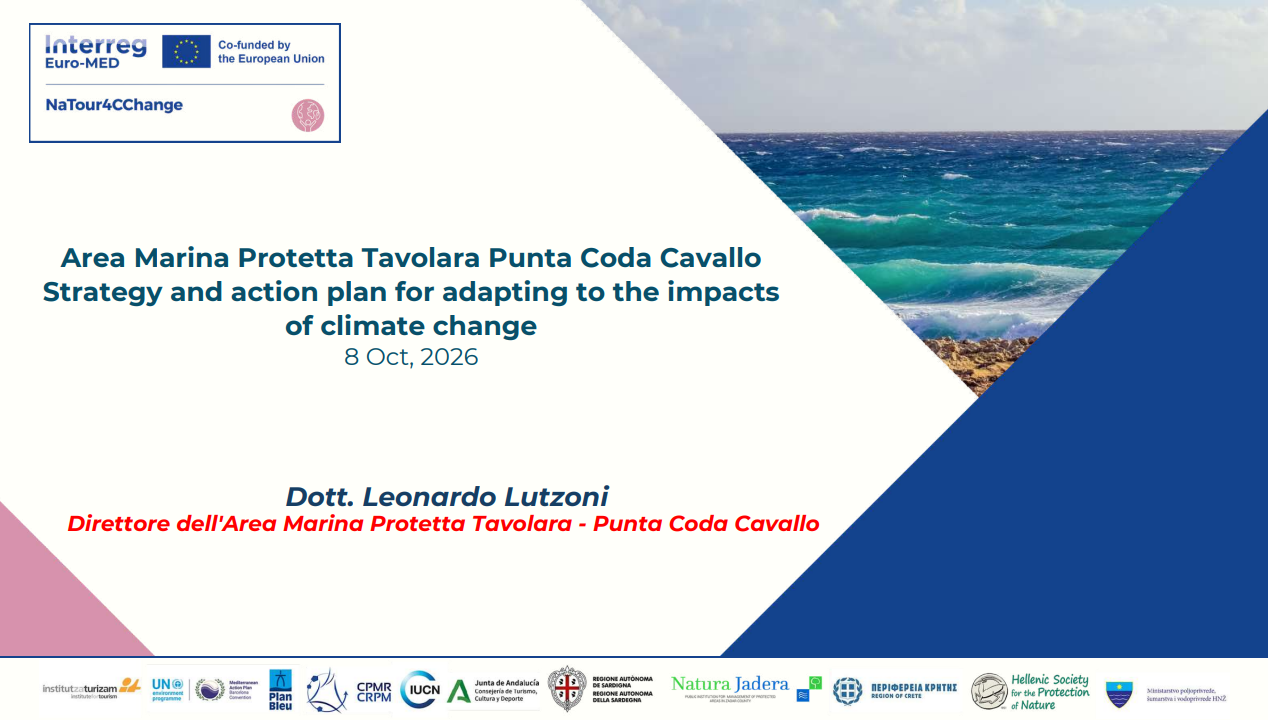
During his presentation, Leonardo Lutzoni outlined the process that led to the development of the local climate adaptation strategy and action plan for the Tavolara – Punta Coda Cavallo Marine Protected Area.
The work translated the guidelines of the Regional Climate Change Adaptation Strategy into a territorial planning framework through risk analysis, assessment of environmental and economic vulnerabilities, and the involvement of the municipalities of Olbia, Loiri Porto San Paolo and San Teodoro, together with relevant authorities and local stakeholders.
The climate analysis, also drawing on data from ARPAS meteorological stations, highlighted increasing pressures on coastal systems, including rising temperatures, Mediterranean Sea warming, sea-level rise and greater vulnerability to extreme marine weather events.
A multi-temporal analysis of beaches also documented shoreline retreat of up to 10–15 metres in the major sandy coastal systems of La Cinta, Lu Impostu and Porto Taverna, particularly evident over the past fifteen years.
These phenomena are compounded by pressures associated with tourism, access to back-dune areas and habitat fragmentation, which reduce the natural capacity of coastal ecosystems to adapt to climate change.
Proposed statement by Leonardo Lutzoni, Director of the Tavolara – Punta Coda Cavallo Marine Protected Area (subject to approval):
“With this local climate adaptation plan, we are moving from analysing coastal vulnerabilities to identifying concrete priorities for action. At Cala Brandinchi, restoring the dune system, managing beached Posidonia and reducing tourism pressure are interconnected measures. Protecting these natural ecosystems is essential not only for biodiversity, but also for the long-term sustainability of our tourism destination.”
Cala Brandinchi: Three Nature-Based Solutions for Climate Adaptation
Among the areas analysed, the Cala Brandinchi – Lu Impostu coastal system, in the municipality of San Teodoro, was identified as one of the most vulnerable areas and one of the most strategically important for the local tourism economy.
In 2025, San Teodoro recorded more than 187,000 tourist arrivals and one million overnight stays, with 86% of overnight stays concentrated between June and September. These figures confirm the importance of seasonal tourism pressure in coastal ecosystem management.
The local plan led to the selection of three complementary Nature-based Solutions (NbS).
The first focuses on dune restoration and ecological engineering, through the recovery of native vegetation, the closure of unauthorised access routes and the use of natural structures to encourage sand accumulation and counter coastal erosion.
The second concerns the adaptive management of beached Posidonia oceanica and the restoration of sediment balance, recognising the role that natural seagrass deposits play in protecting beaches and retaining sand.
The third addresses sustainable tourism flow management, through access regulation, the organisation of visitor routes and measures to reduce human pressure on the most vulnerable habitats.
Among these three measures, restoration of the Cala Brandinchi dune system was identified as the plan’s priority action. The proposed intervention covers approximately 700 metres of coastline and an area of 10,000 square metres, with an estimated initial investment of between €1.5 million and €2 million.
The feasibility study also proposes the creation of a local Environmental Fund, financed through a share of tourism-related revenues, to support the long-term maintenance and monitoring of the interventions.
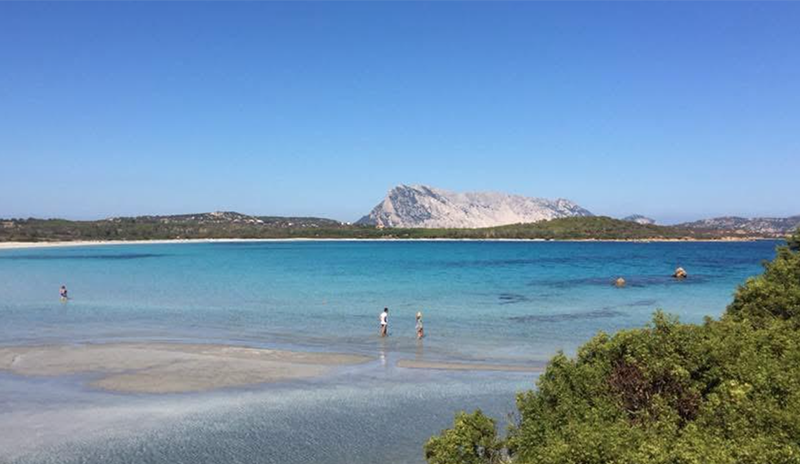
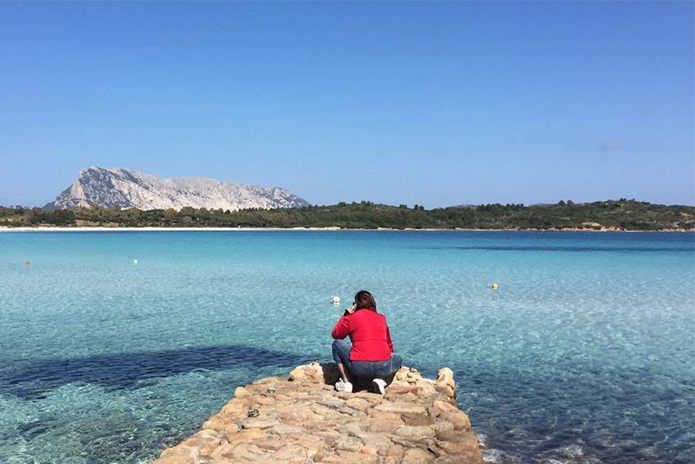
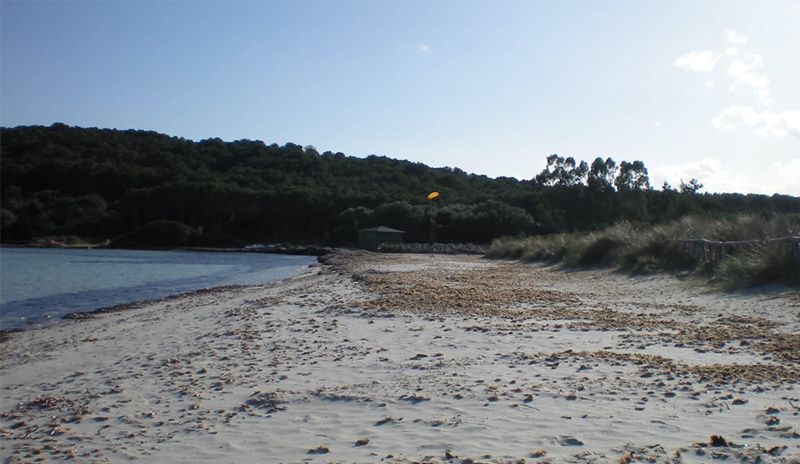
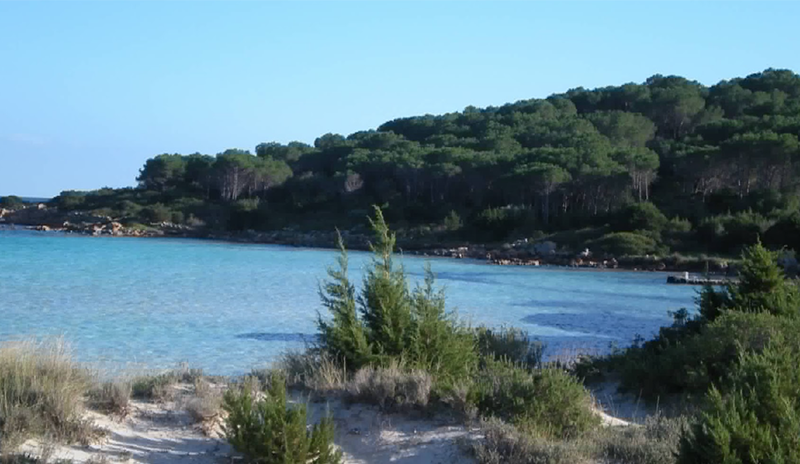
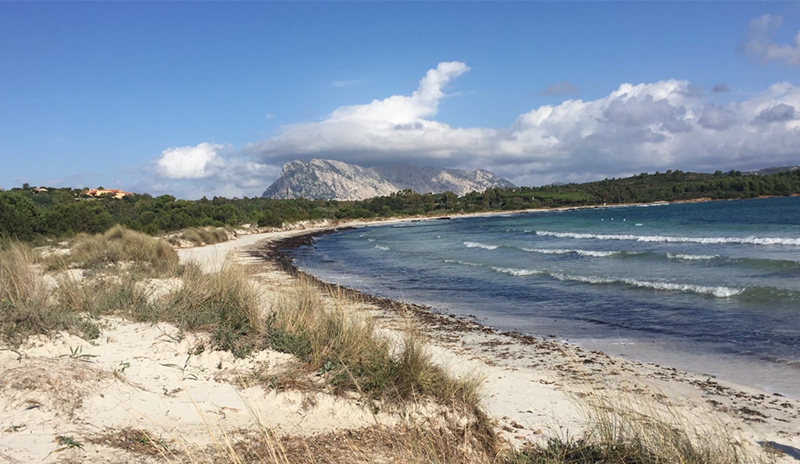
Together, the three solutions reflect an integrated approach to adaptation: restoring ecosystems, enhancing natural processes and managing visitor pressure so that environmental protection becomes an integral part of tourism destination management.
MEDSEA’s Contribution: From Destination Promotion to Communication as an Adaptation Tool
Alongside the environmental strategy, the project addressed an equally important question: how should a tourism destination communicate when it must adapt to climate change, manage visitor pressure and protect its natural capital?
This was the focus of the MEDSEA Foundation’s contribution, which developed a climate-focused marketing and communication plan for the Cala Brandinchi – Lu Impostu pilot site.
The strategy is based on a fundamental shift in perspective: communication should not simply aim to increase tourism demand, but rather manage expectations, improve understanding of conservation measures and encourage responsible visitor behaviour.
From promotion to engagement. From presenting the beach as a postcard-perfect destination to communicating it as a living, vulnerable ecosystem that needs to be respected.
The approach starts from a simple observation: images used to promote coastal destinations often feature empty beaches, turquoise waters and pristine landscapes, without explaining the environmental processes that sustain their beauty or the rules needed to preserve them.
In the case of Cala Brandinchi, frequently described as “Little Tahiti”, this narrative risks creating unrealistic expectations of a natural site characterised by regulated access, dune restoration areas and the seasonal presence of beached Posidonia oceanica.
MEDSEA’s strategy therefore proposes a change in communication style, explaining not only what visitors should do, but above all why these behaviours matter.
Beached Posidonia, for example, should not be presented as a beach-cleaning problem, but as a natural component of the ecosystem that helps protect the coastline. Similarly, boardwalks, protective fences and regulated access should not be communicated simply as restrictions, but as essential measures to prevent erosion and environmental degradation.
What 500 Visitor Reviews Reveal
To better understand visitors’ perceptions of the destination, MEDSEA analysed 500 public Tripadvisor reviews of Cala Brandinchi, published between June 2022 and July 2026 and classified according to 14 themes.
The analysis revealed a significant gap between environmental issues and the aspects that dominate visitors’ accounts of their experiences.
Some 84.8% of reviews addressed visitor management issues, including reservations, prices, parking, overcrowding and services. Only 8.8% referred to environmental topics, while just 2.4% mentioned dunes or coastal erosion.
Perceptions of Posidonia also emerged as a critical issue: natural seagrass deposits are sometimes interpreted as evidence of inadequate beach cleaning rather than as part of the coastal ecosystem’s ecological balance.
These findings suggest that environmental communication cannot rely solely on awareness campaigns disconnected from the visitor experience. Instead, it must be integrated into the channels and moments when visitors seek information, make decisions and evaluate their experiences.
From Websites to Beaches: Rethinking Communication Across Visitor Touchpoints
The strategy developed by MEDSEA provides practical examples of how messages, content and communication tools can be adapted throughout the entire visitor journey, from choosing a destination to returning home.
The first area concerns digital channels, starting with the official website and information available through Google and social media.
A dedicated Cala Brandinchi webpage, for example, should prominently display the booking system, access procedures, alternative mobility options and the beach’s natural characteristics before visitors arrive. Images should provide a realistic representation of the site, including dunes, Posidonia deposits and conservation infrastructure, rather than creating expectations based exclusively on pictures of an empty beach.
Booking systems and confirmation emails can combine practical information with short explanations of the environmental value of conservation measures.
Once visitors reach the destination, the plan proposes communication interventions in car parks, at entrances and along visitor routes, using signage that encourages appropriate behaviour rather than relying exclusively on prohibitions.
Among the examples developed are three nudging prototypes: small interventions designed to make responsible behaviour easier and more appealing.
A designated photo point along an authorised route, accompanied by the message “The Best View Is from Here”, can encourage visitors to take photographs without crossing the dunes.
Positive wayfinding messages such as “You’re on the Right Path” can reinforce the use of boardwalks and designated trails.
An interpretation panel at a dune restoration site, displaying the message “A New Dune Is Growing Here”, can make a slow natural process visible, showing how an apparently bare area can gradually develop into a restored habitat.
Online reviews also become opportunities for environmental communication. Responding to a negative comment about beached Posidonia, for example, provides an opportunity to explain its ecological role and address misconceptions.
The aim is to integrate environmental protection into existing visitor touchpoints, without necessarily creating new communication channels.
Tourism Operators as Ambassadors for Climate Resilience
Another central element of MEDSEA’s plan is the direct involvement of tourism operators.
The strategy proposes a Local Ambassador programme targeting beach concession operators, accommodation providers, guides, nautical tourism businesses, parking and entrance staff, information points and hospitality professionals.
These stakeholders interact with visitors every day and are therefore well placed to explain, using simple and consistent language, why conservation measures are necessary.
The programme proposes training activities focused on coastal ecology, nature-based solutions and communication tools, supported by a shared toolkit containing key messages, FAQs, information materials and guidance for managing online reviews.
The strategy is structured around three pillars — Protect, Respect, Participate — and five calls to action: stay on designated paths, respect Posidonia, plan visits in advance and comply with access limits, give nature space to regenerate, and share experiences responsibly.
The message summarising the plan is “Experience It. Respect It. Protect It.”
An Operational Plan to Measure Behaviour, Not Just Visibility
MEDSEA’s work includes a climate communication and marketing strategy, an operational roadmap comprising 12 actions, and a set of indicators to monitor results.
The proposed activities include updating official information channels, developing consistent messages, training tourism operators, testing behavioural signage and periodically analysing visitor perceptions.
The difference compared with a traditional communication plan also lies in how success is measured.
Rather than focusing exclusively on views, content reach or digital engagement, the strategy proposes indicators capable of assessing whether communication actually contributes to behavioural change: fewer visitors leaving designated paths, greater respect for restoration areas, improved understanding of Posidonia and access restrictions, and changes in the environmental topics mentioned in online reviews.
The plan therefore positions communication as an integral part of destination management and climate adaptation measures, with actions to be tested, evaluated and refined over time.
Project Conclusions and Future Perspectives
The Cagliari event marked a concluding opportunity to present the results of NaTour4CChange in Sardinia and discuss the future implementation of regional and local strategies.
The final roundtable brought together representatives of the Region and local authorities, highlighting the need to integrate climate adaptation into territorial planning and tourism policies.
For the Tavolara – Punta Coda Cavallo Marine Protected Area, the project has produced a framework of knowledge, priorities and operational proposals that can guide future management decisions, beginning with the restoration of the Cala Brandinchi dune system.
MEDSEA’s contribution adds a complementary dimension to this approach: the need to support environmental interventions with communication that makes them understandable, encourages shared responsibility and helps visitors and tourism operators adopt behaviours that contribute to conservation.
A destination’s climate resilience depends not only on the environmental interventions implemented on the ground, but also on its ability to change how the destination is presented, experienced and respected. This integration of ecosystem protection, tourism management and communication represents one of the key outcomes of the NaTour4CChange project.
download Dr. Lutzoni's presentation
Latest news

NaTour4CChange, Final Results Presented in Cagliari: A Plan to Protect Tavolara’s Coastline and Rethink Tourism Communication
Final results of the European NaTour4CChange project presented in Cagliari. Leonardo Lutzoni, Director of the Tavolara – Punta Coda Cavallo Marine Protected Area, presented the local climate adaptation plan and…

Ocean&Climate Village comes to Cagliari for the first time: MEDSEA engages schools and university students
For the first time, the Ocean&Climate Village came to Cagliari, bringing an exhibition dedicated to ocean awareness, the ocean’s role in regulating the climate, and the protection of marine biodiversity…

Il Viaggio delle Balene: Tracce nel Blu expedition concludes after 497 nautical miles of marine biodiversity research around Sardini
The scientific expedition Tracce nel Blu – Route for Biodiversity concluded on Friday, 9 October. It marked the second edition of ** Il Viaggio delle Balene (The Whale Journey)**, a…

Tracce nel Blu 2026: the new Il Viaggio delle Balene mission has set sail
Tracce nel Blu – Route for Biodiversity has set sail: the 2026 scientific expedition of Il Viaggio delle Balene, dedicated to cetacean monitoring, Mediterranean monk seal research through environmental DNA…

MEDCONNECT launches in Limassol: MEDSEA leads two Work Packages and the Italian National Hub
Turning blue innovation into solutions that can be adopted, financed and replicated across the Mediterranean. This is the challenge at the heart of MEDCONNECT, the new Mediterranean Lighthouse of the…

After Decades on the Seabed, Ghost Net Removed off Villasimius with GhostNetBusters
120 kg of fishing nets were removed from the seabed, while a further 510 kg of nets and other fishing gear recovered during previous operations were disposed of, together with…

"GhostNetBusters”: Patagonia joins MEDSEA and the Capo Carbonara MPA to free the seabed from ghost nets
Villasimius will host “GhostNetBusters”, an environmental initiative organised by the MEDSEA Foundation in collaboration with the Capo Carbonara Marine Protected Area, with the support of Patagonia

Posidonia oceanica: First Restoration Intervention Launched in Lacco Ameno Bay, Ischia
As part of the Oasi Marina initiative promoted by Beiersdorf and announced last year, MEDSEA Foundation has completed its first Posidonia oceanica restoration intervention in Lacco Ameno Bay, on the island of Ischia. The restoration…

CRESO Project Meets in Nice: MEDSEA Presents a Roadmap from Climate Risk to Coastal Action
The Interreg Marittimo project CRESO gathered its partners in Nice on 5 June 2026 for a full-day meeting dedicated to presenting the first year of work on a cross-border approach…

Wetland4Change, from research to planning: the project’s final meeting in the Camargue
Two days of discussion on wetland-based solutions for carbon sequestration and flood risk reduction. MEDSEA presented the results from the Marceddì–San Giovanni pilot site together with representatives of the Regional…

ARTEMIS, from pilot actions to Mediterranean-scale impact: MEDSEA at the final conference in Menorca
Three days of discussion on the results of the Interreg Euro-MED project dedicated to seagrass meadow restoration. MEDSEA presented the Sardinian pilot site and the communication work that documented two…

Posidonia Restoration: 15 ARTEMIS Recommendations to Support Italy and the Mediterranean in Implementing the Nature Restoration Law
The restoration of Mediterranean seagrass meadows must move from fragmented pilot projects to long-term, large-scale action supported by coherent governance and sustainable financing, according to the new report released by…

Marco Spinelli. The power of storytelling to protect seas
For Marco Spinelli, the sea has always been home. A photographer, documentary filmmaker and explorer of the underwater world, he grew up in Sicily, where he spent his childhood exploring the…

Mona Khalil: A Life Devoted to the Sea, Cut Short by War
The voice of Mona Khalil, guardian of southern Lebanon's sea turtles, has been silenced by bombs. For more than twenty years, Mona dedicated her life to protecting sea turtles on…

El Niño: The planet's irregular heartbeat that could also affect the Mediterranean.
El Niño is one of the most important natural climate phenomena on Earth. Although it originates in the tropical Pacific Ocean, it can influence weather and climate on a global scale…

Virginia Salzedo. Finding Resilience in a Fragile Sea
For those who truly know the sea, it is not only about whales or spectacular encounters with its most iconic inhabitants. This is certainly the case for Virginia Salzedo, an internationally…
- 1
- 2
- 3
- 4