
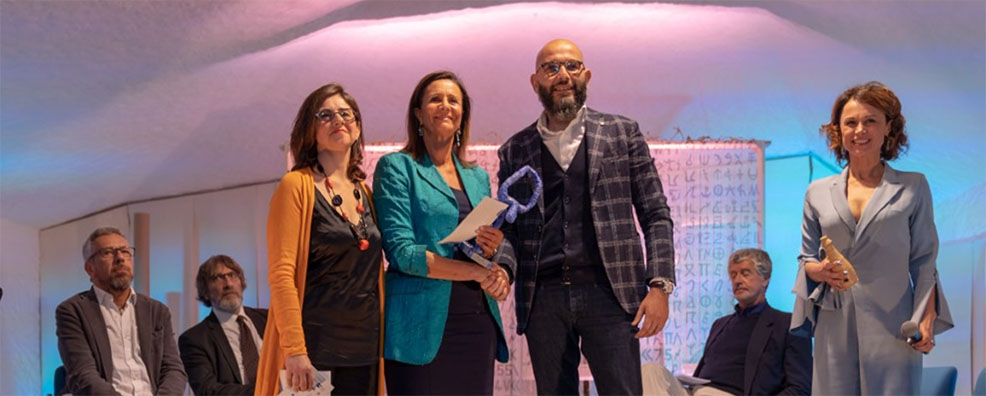
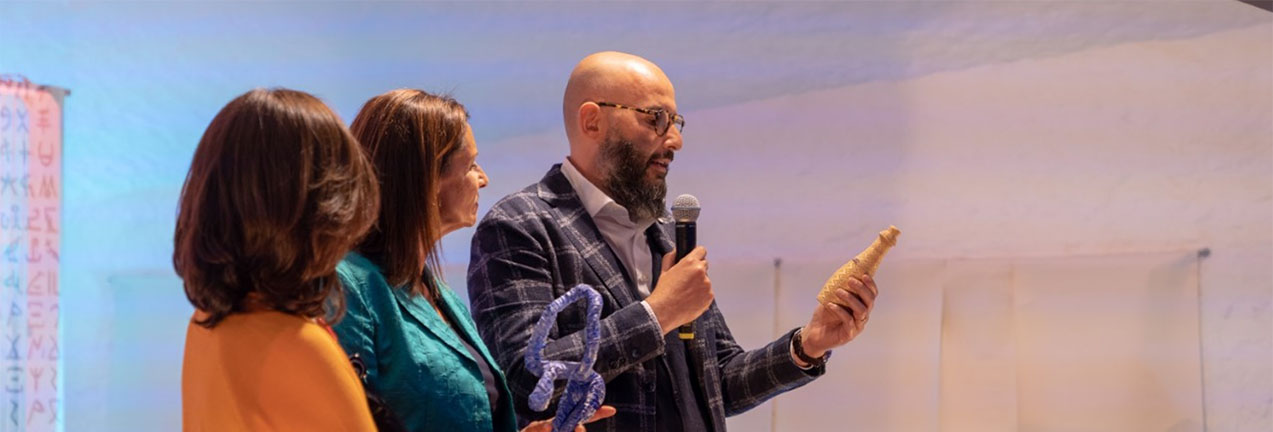
"More attention to the Oceans, we have only one planet": with the usual courtesy, the one with which he entered the homes of Italians through the 3000 episodes of his television programs Quark and SuperQuark and with his 39 books, Piero Angela relaunched the message at the 2019 edition of the Costa Smeralda Prize, dedicated to the sea, which celebrated the final evening in Porto Cervo. The motivation with which he was awarded by the jury of the Award is the thought of all: "Admiration and sincere gratitude for the authority, competence and generosity with which he was able to spread scientific, cultural and value content in our country, a great example of how the rigor of the content can be accompanied by a brilliant ability to tell them, thus enriching our common cultural heritage". The sea therefore needs an evocative and at the same time solid narrative. We must therefore learn to tell, involve and motivate.  The MEDSEA Foundation, which curated the Blue Innovation section of the Prize, is engaged in a campaign to raise awareness and promote actions and projects aimed at reducing the impacts that cause the loss of natural and cultural heritage. Plastic pollution is one of the biggest threats: Northern European governments have gained institutional awareness and are the first in the world to formally request a global treaty to address the crisis generated by plastic pollution in our oceans. The declaration was presented two weeks before the final of the Costa Smeralda Prize by environment ministers from Denmark, Finland, Iceland, Norway and Sweden at the Nordic Council in Reykjavik. In a context of advanced compromise, the issue of plastic waste pollution led the jury to choose the winner of the Blue Innovation section: Seabin by LifeGate PlasticLess, the project of the waste bin for the sea that can also collect microplastics. "There were so many ideas, research and projects presented at the 2019 edition of the Costa Smeralda Award, Blue Innovation section - explains the president of MEDSEA, Alessio Satta - among these, we selected twelve based on originality and the real impact on the protection of marine and coastal ecosystems. The dominant theme is that of solutions for the pollution of plastic at sea and the reduction of waste from motor navigation, but there was also talk of cork surfboards, fishing with low environmental impact and innovative projects for environmental education". What is Seabin, the winning project? It is a floating waste bin capable of capturing about 1.5 kg of debris per day, or more than 500 kg of waste per year (depending on the weather and debris volumes), including microplastics from 5 to 2 mm in diameter and microfibers from 0.3 mm. The Seabin is immersed in water and fixed to a wharf with the top of the device at water surface level. Due to the spontaneous action of the wind, currents, and the strategic location of the Seabin, debris is conveyed directly into the device. The water pump, connected to the base of the unit, is capable of treating 25,000 litres of seawater per hour. The waste is captured in the basket inside, which can hold up to 20kg, while the water flows through the pump and back into the sea. When the bag is full, it is emptied and cleaned. A system to help keep our seas healthy. Telling all this, transforming the commitment of many into an epic story, is the mission of Piero Angela, one of the most beloved Italian science communicators. Action and storytelling together can do a lot. Proud to have collaborated in the prestigious Costa Smeralda Prize, the MEDSEA team thanks the Consortium and the entire organization for their efforts
La Fondazione MEDSEA, che ha curato la sezione Innovazione Blu del Premio, è impegnata nella campagna di sensibilizzazione e promozione di azioni e progetti, finalizzati a ridurre gli impatti che causano la perdita del patrimonio naturale e culturale. L'inquinamento da plastica è una delle minacce più grandi: i governi del Nord Europa hanno conquistato consapevolezza a livello istituzionale e sono i primi al mondo a chiedere formalmente un trattato globale per affrontare la crisi generata dall'inquinamento da plastica nei nostri oceani. La dichiarazione è stata presentata due settimane prima della finale del Premio Costa Smeralda dai ministri dell'ambiente di Danimarca, Finlandia, Islanda, Norvegia e Svezia presso il Consiglio nordico di Reykjavik. In un contesto di avanzata compromissione, il tema dell'inquinamento da rifiuti plastici ha guidato la giuria alla scelta del vincitore della sezione Innovazione Blu: Seabin by LifeGate PlasticLess, il progetto del cestino dei rifiuti per il mare capace di raccogliere anche le microplastiche. “Sono state davvero tante le idee, le ricerche e i progetti presentati all'edizione 2019 del Premio Costa Smeralda, sezione Innovazione Blu – spiega il presidente di MEDSEA, Alessio Satta - tra questi, ne abbiamo selezionati dodici in base all’originalità e al reale impatto sulla tutela degli ecosistemi marino-costieri.
Il tema dominante è quello delle soluzioni per l’inquinamento della plastica in mare e della riduzione degli scarichi derivanti dalla navigazione a motore, ma si parlava anche di tavole da surf in sughero, di pesca a basso impatto ambientale e di progetti innovativi per l’educazione all’ambiente”. In cosa consiste Seabin, il progetto vincente? Si tratta di un cestino di raccolta dei rifiuti galleggianti in grado di catturare circa 1,5 kg di detriti al giorno, ovvero oltre 500 Kg di rifiuti all’anno (a seconda del meteo e dei volumi dei detriti), comprese le microplastiche da 5 a 2 mm di diametro e le microfibre da 0,3 mm. Il Seabin viene immerso nell’acqua e fissato ad un pontile con la parte superiore del dispositivo al livello della superficie dell’acqua. Grazie all’azione spontanea del vento, delle correnti e alla posizione strategica del Seabin, i detriti vengono convogliati direttamente all’interno del dispositivo. La pompa ad acqua, collegata alla base dell’unità, è capace di trattare 25.000 litri di acqua marina all’ora. I rifiuti vengono catturati nel cestino al suo interno, che può contenere fino a un massimo di 20kg, mentre l’acqua scorre attraverso la pompa e torna in mare. Quando la borsa è piena, viene svuotata e pulita. Un sistema per aiutare a conservare sani i nostri mari. Raccontare tutto questo, trasformare l'impegno di molti in una storia epica, è la missione di Piero Angela, tra i più amati divulgatori scientifici italiani. Azione e alla narrazione insieme possono fare tamto. Fiero di aver dato il suo contributo, il team di MEDSEA ringrazia il Consorzio e tutta l'organizzazione del Premio Costa Smeralda
Latest news

Ocean&Climate Village comes to Cagliari for the first time: MEDSEA engages schools and university students
For the first time, the Ocean&Climate Village came to Cagliari, bringing an exhibition dedicated to ocean awareness, the ocean’s role in regulating the climate, and the protection of marine biodiversity…

Il Viaggio delle Balene: Tracce nel Blu expedition concludes after 497 nautical miles of marine biodiversity research around Sardini
The scientific expedition Tracce nel Blu – Route for Biodiversity concluded on Friday, 9 October. It marked the second edition of ** Il Viaggio delle Balene (The Whale Journey)**, a…

Tracce nel Blu 2026: the new Il Viaggio delle Balene mission has set sail
Tracce nel Blu – Route for Biodiversity has set sail: the 2026 scientific expedition of Il Viaggio delle Balene, dedicated to cetacean monitoring, Mediterranean monk seal research through environmental DNA…

MEDCONNECT launches in Limassol: MEDSEA leads two Work Packages and the Italian National Hub
Turning blue innovation into solutions that can be adopted, financed and replicated across the Mediterranean. This is the challenge at the heart of MEDCONNECT, the new Mediterranean Lighthouse of the…

After Decades on the Seabed, Ghost Net Removed off Villasimius with GhostNetBusters
120 kg of fishing nets were removed from the seabed, while a further 510 kg of nets and other fishing gear recovered during previous operations were disposed of, together with…

"GhostNetBusters”: Patagonia joins MEDSEA and the Capo Carbonara MPA to free the seabed from ghost nets
Villasimius will host “GhostNetBusters”, an environmental initiative organised by the MEDSEA Foundation in collaboration with the Capo Carbonara Marine Protected Area, with the support of Patagonia

Posidonia oceanica: First Restoration Intervention Launched in Lacco Ameno Bay, Ischia
As part of the Oasi Marina initiative promoted by Beiersdorf and announced last year, MEDSEA Foundation has completed its first Posidonia oceanica restoration intervention in Lacco Ameno Bay, on the island of Ischia. The restoration…

CRESO Project Meets in Nice: MEDSEA Presents a Roadmap from Climate Risk to Coastal Action
The Interreg Marittimo project CRESO gathered its partners in Nice on 5 June 2026 for a full-day meeting dedicated to presenting the first year of work on a cross-border approach…

Wetland4Change, from research to planning: the project’s final meeting in the Camargue
Two days of discussion on wetland-based solutions for carbon sequestration and flood risk reduction. MEDSEA presented the results from the Marceddì–San Giovanni pilot site together with representatives of the Regional…

ARTEMIS, from pilot actions to Mediterranean-scale impact: MEDSEA at the final conference in Menorca
Three days of discussion on the results of the Interreg Euro-MED project dedicated to seagrass meadow restoration. MEDSEA presented the Sardinian pilot site and the communication work that documented two…

Posidonia Restoration: 15 ARTEMIS Recommendations to Support Italy and the Mediterranean in Implementing the Nature Restoration Law
The restoration of Mediterranean seagrass meadows must move from fragmented pilot projects to long-term, large-scale action supported by coherent governance and sustainable financing, according to the new report released by…

Marco Spinelli. The power of storytelling to protect seas
For Marco Spinelli, the sea has always been home. A photographer, documentary filmmaker and explorer of the underwater world, he grew up in Sicily, where he spent his childhood exploring the…

Mona Khalil: A Life Devoted to the Sea, Cut Short by War
The voice of Mona Khalil, guardian of southern Lebanon's sea turtles, has been silenced by bombs. For more than twenty years, Mona dedicated her life to protecting sea turtles on…

El Niño: The planet's irregular heartbeat that could also affect the Mediterranean.
El Niño is one of the most important natural climate phenomena on Earth. Although it originates in the tropical Pacific Ocean, it can influence weather and climate on a global scale…

Virginia Salzedo. Finding Resilience in a Fragile Sea
For those who truly know the sea, it is not only about whales or spectacular encounters with its most iconic inhabitants. This is certainly the case for Virginia Salzedo, an internationally…

Mediterranean Seagrass Restoration Efforts Continue in Greece
Following restoration interventions in Sardinia and Malta, MEDSEA has now completed a new restoration campaign on the Greek island of Arkoudi, working alongside iSea, a Greek environmental organisation dedicated to marine…
- 1
- 2
- 3
- 4