

Every resident of Sardinia should cut 37 kilos in its waste production by 2022. Solutions to "lighten up" and start thinking in a Circular way were discussed at the MEDSEA Foundation conference "Circularity in Sardinia, from production models and smart consumption management of food and everyday goods ” last May, the 3rd.
At the time of a pandemic, different realities and solutions were born and got more and more adopted by citizens to deal with waste in Sardinia: from food to basic necessities such as clothing, passing through furniture, computers and bicycles.
Because if it is true that Sardinia, according to the latest Ispra data, is more virtuous on separate collection, with 73% * of waste disposed of out of the total and 452Kg produced per capita – it’s currently the second region of Italy after Veneto (75%) for waste disposal, against a national average of 61.28% - it is also true that the regional goal of bringing waste produced per person to 415Kg by 2022 is still a long way off. As well as the production of wet waste that exceeds the national average. With 44.70% of the differentiated total, compared to 39.68% of the national average, Sardinia is among the regions that produce more wet waste (148Kg), with 27 kg more than the national average.
Furthermore, in some municipalities, especially coastal ones, the per capita production of garbage, albeit separated, exceeds the regional average to reach over half a ton of waste produced per person, such as in Pula, Villasimius, Castiadas, Stintino, Aglientu, San Teodoro, Trinità d'Agultu and Vignola, Golfo Aranci and Palau.
There are therefore two main critical issues: reducing the load especially in coastal municipalities and rebalancing the percentage of wet waste, especially as regards food waste. "Tackling the issue of waste as an economic resource in a circular model helps to find solutions within the same problem - explains Vania Statzu, vice president of MEDSEA - adopting more efficient production models and more circular consumption, capable of self-regeneration, is the key; in recent months we are observing many changes towards this direction”.
In the last 12 months, various solutions have been adopted and proposed by Sardinian companies and realities to improve these data and allow unsold food to be put back into circulation as well as primary goods such as clothing or vehicles, such as bicycles. In the case of “Too Good To Go”, a Danish company, which landed in Italy a nit more than a year ago and in Sardinia, food waste is fought with an app that allows merchants from small businesses to large-scale food distribution, to put unsold items back into circulation with the help of the “Magic box”. The user books his bag which surprisingly brings back the day's leftovers (at one third of the price at which they are normally sold), preventing them from being thrown away; the merchant recovers the living costs. A win-win relationship that has already involved numerous entrepreneurs in Italy and various businesses in Cagliari, including the Porta 1918 bakery network.
"The typical customer who buys stock is not only, as you might think, a user with low spending power - says Riccardo Porta, owner of the Porta 1918 bakery chain - on the contrary, they are often with a certain sensitivity towards the environment with good spending capacity. Of course, we also have off-site students, but at the moment they are not the main. It will be interesting to bring the service to small villages too”.
On the goods side, such as clothing or essential home furnishings, two Sardinian realities arouse interest in the period. The first is “team reuse”, a project by three friends from Cagliari, Sara, Elena and Michela, who have made virtual on instagram and Depop a collective wardrobe of used garments, from jackets to t-shirts, to which they give new life, arranging them when needed with a needle and wire.
"Before the pandemic we used to meet and exchange used clothes between friends, - says Sara Sainas of the reuse team - with the pandemic it was no longer possible and we opened the virtual wardrobe online and invited everyone to exchange their clothes in this way. We sell the most important items, sometimes we rearrange them in a creative way ".
In line with this principle, Domus Oristano association led by Luisanna Usai tackle waste with "No SprecOR" to put back in circle food stocks in Oristano. As well as with Reuse Center of Oristano the volunteers collect items and materials, from clothing to furnishings, passing through electronics, which they arrange and readjust, making them available to person in need.
“The same people we have helped in the past often decide to donate their time and manual skills to help out in the workshop - says Gigi Piredda from Reuse Center Oristano - and this has an impact not only on the environment, but also on a social level”.
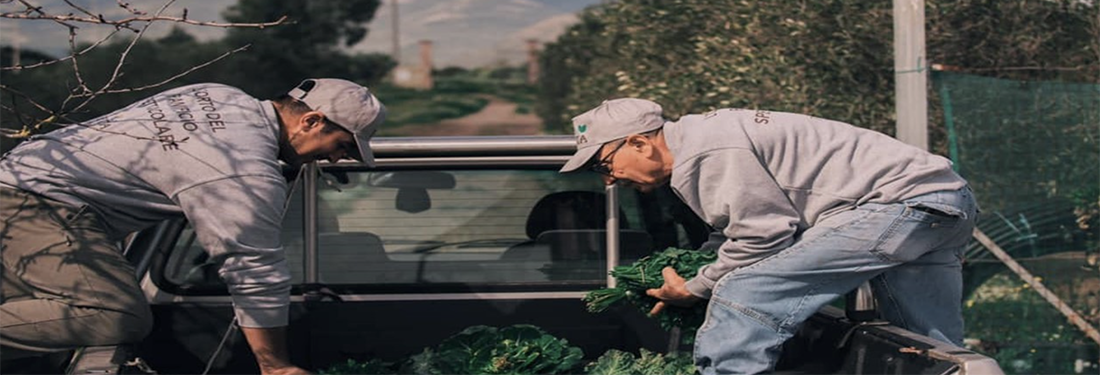
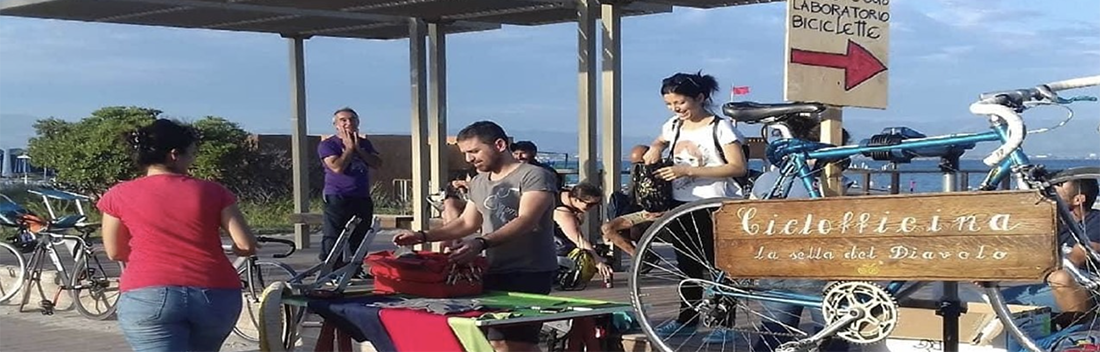
Pierluigi Simmini, area manager of Central Southern Italy of Too Good To Go, Riccardo Porta di Porta 1918, Sebastiano Mundula from La Ciclofucina, Sara Sainas from team reuse, Luisanna Usai and Mario Luigi Piredda from the Domus Oristano Reuse Center and Emanuele Spanò from Coldiretti Oristano, have contributed to the debate "Circularity in Sardinia, from production and management models to the smart consumption of food and everyday goods".
*Dati Ispra (Istituto superiore per la protezione e la ricerca ambientale) "Rapporto Rifiuti Urbani 2019"
Latest news

Tracce nel Blu 2026: the new Il Viaggio delle Balene mission has set sail
Tracce nel Blu – Route for Biodiversity has set sail: the 2026 scientific expedition of Il Viaggio delle Balene, dedicated to cetacean monitoring, Mediterranean monk seal research through environmental DNA…

MEDCONNECT launches in Limassol: MEDSEA leads two Work Packages and the Italian National Hub
Turning blue innovation into solutions that can be adopted, financed and replicated across the Mediterranean. This is the challenge at the heart of MEDCONNECT, the new Mediterranean Lighthouse of the…

After Decades on the Seabed, Ghost Net Removed off Villasimius with GhostNetBusters
120 kg of fishing nets were removed from the seabed, while a further 510 kg of nets and other fishing gear recovered during previous operations were disposed of, together with…

"GhostNetBusters”: Patagonia joins MEDSEA and the Capo Carbonara MPA to free the seabed from ghost nets
Villasimius will host “GhostNetBusters”, an environmental initiative organised by the MEDSEA Foundation in collaboration with the Capo Carbonara Marine Protected Area, with the support of Patagonia

Posidonia oceanica: First Restoration Intervention Launched in Lacco Ameno Bay, Ischia
As part of the Oasi Marina initiative promoted by Beiersdorf and announced last year, MEDSEA Foundation has completed its first Posidonia oceanica restoration intervention in Lacco Ameno Bay, on the island of Ischia. The restoration…

CRESO Project Meets in Nice: MEDSEA Presents a Roadmap from Climate Risk to Coastal Action
The Interreg Marittimo project CRESO gathered its partners in Nice on 5 June 2026 for a full-day meeting dedicated to presenting the first year of work on a cross-border approach…

Wetland4Change, from research to planning: the project’s final meeting in the Camargue
Two days of discussion on wetland-based solutions for carbon sequestration and flood risk reduction. MEDSEA presented the results from the Marceddì–San Giovanni pilot site together with representatives of the Regional…

ARTEMIS, from pilot actions to Mediterranean-scale impact: MEDSEA at the final conference in Menorca
Three days of discussion on the results of the Interreg Euro-MED project dedicated to seagrass meadow restoration. MEDSEA presented the Sardinian pilot site and the communication work that documented two…

Posidonia Restoration: 15 ARTEMIS Recommendations to Support Italy and the Mediterranean in Implementing the Nature Restoration Law
The restoration of Mediterranean seagrass meadows must move from fragmented pilot projects to long-term, large-scale action supported by coherent governance and sustainable financing, according to the new report released by…

Marco Spinelli. The power of storytelling to protect seas
For Marco Spinelli, the sea has always been home. A photographer, documentary filmmaker and explorer of the underwater world, he grew up in Sicily, where he spent his childhood exploring the…

Mona Khalil: A Life Devoted to the Sea, Cut Short by War
The voice of Mona Khalil, guardian of southern Lebanon's sea turtles, has been silenced by bombs. For more than twenty years, Mona dedicated her life to protecting sea turtles on…

El Niño: The planet's irregular heartbeat that could also affect the Mediterranean.
El Niño is one of the most important natural climate phenomena on Earth. Although it originates in the tropical Pacific Ocean, it can influence weather and climate on a global scale…

Virginia Salzedo. Finding Resilience in a Fragile Sea
For those who truly know the sea, it is not only about whales or spectacular encounters with its most iconic inhabitants. This is certainly the case for Virginia Salzedo, an internationally…

Mediterranean Seagrass Restoration Efforts Continue in Greece
Following restoration interventions in Sardinia and Malta, MEDSEA has now completed a new restoration campaign on the Greek island of Arkoudi, working alongside iSea, a Greek environmental organisation dedicated to marine…

Greg Lecoeur: Photographing a Changing Ocean
For Greg Lecoeur, the sea has never been merely a subject to photograph. An explorer, wildlife photographer, and storyteller of the marine world, he has transformed a passion nurtured since…

World Oceans Day 2026: Looking Beneath the Surface
The ocean covers around 70% of the Earth's surface, produces more than half of the oxygen we breathe, and absorbs vast amounts of carbon dioxide and heat, helping to mitigate…
- 1
- 2
- 3
- 4