


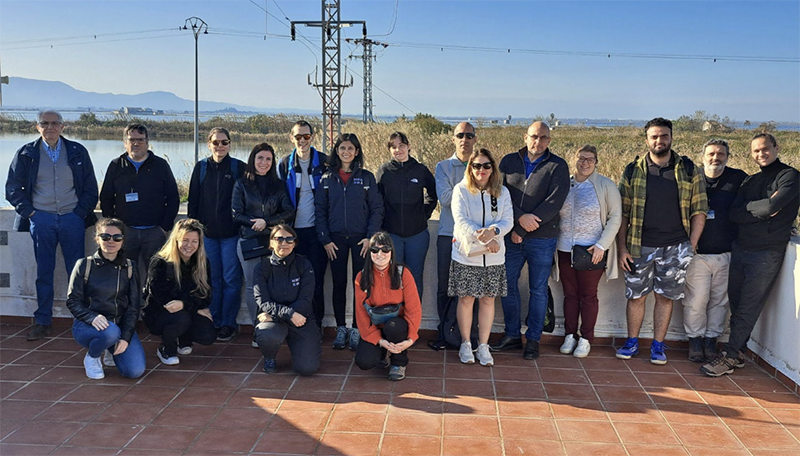
The MEDSEA team participated in the second Consortium meeting of the Wetland4Change project in Valencia from November 26 to 28, 2024. The meeting was organized by local project partners, the University of Valencia. The Interreg Euro-MED project aims to validate transferable solutions based on wetland conservation and restoration for climate adaptation and mitigation, promoting the adoption of scientific knowledge and governance mechanisms.
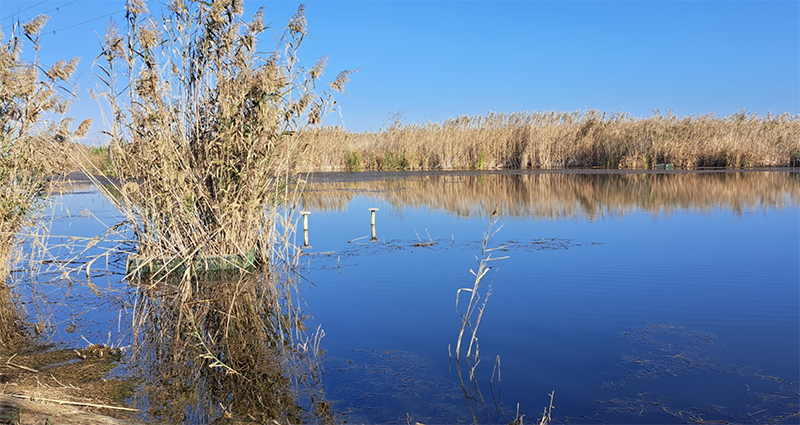

Carles Sanchis, President of the Management Council of Albufera Natural Park, provided a detailed account of the wetland system's condition during the DANA. He reported that “in the area where the storm was most intense, 641 mm of rain fell, equivalent to the annual rainfall in Paris, with 187 mm recorded in just one hour—a record for the entire Iberian Peninsula since precipitation data has been recorded.”
He explained, “The system was not in optimal condition. Structural damages to the water system, primarily due to hypertrophy caused by inefficiencies in the sewer system dating back to the 1960s and '70s, led to significant pollutant influx into the wetlands. As the system was recovering from this severe issue, new problems related to climate change emerged, such as more frequent and intense droughts, intensified storms like the recent DANA, rising sea levels, and increasing salinity in the wetlands. Although the ecosystem can slowly adapt, these changes pose serious threats to local economic activities like rice farming and other crops.”
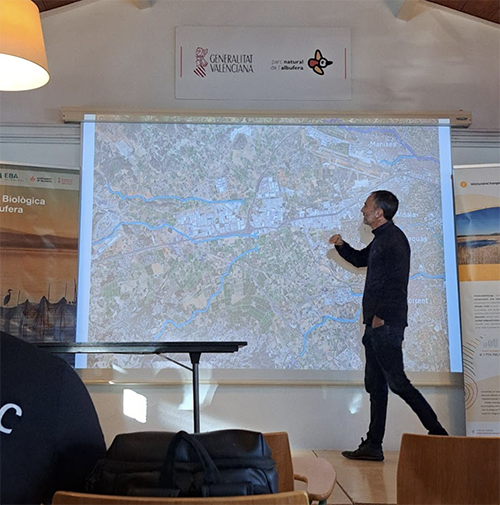
In this context, wetlands represent a possible solution for mitigating the effects of climate change due to their ability to sequester carbon, regulate floods, reduce pollutants, conserve biodiversity, and protect local communities from extreme climate events.
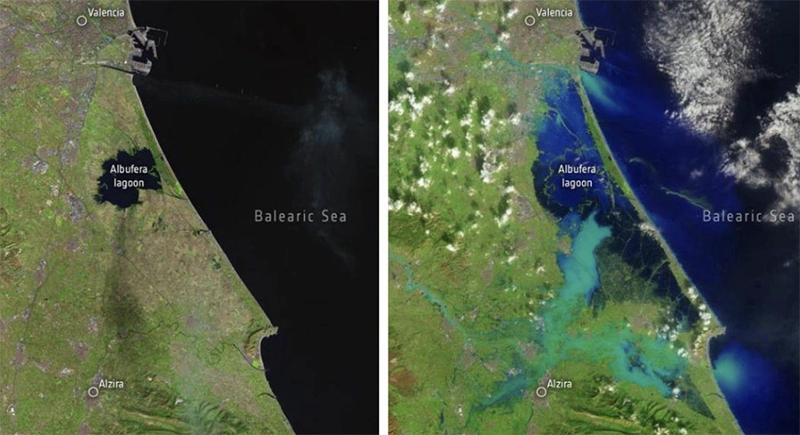
Professor Antonio Camacho, Director of the Limnology Group at the Cavanilles Institute of Biodiversity and Evolutionary Biology and Professor of Ecology at the University of Valencia, emphasized: "Ecosystems, especially aquatic ones, provide essential services for human well-being. The Albufera and its natural context played a crucial role in mitigating the floods caused by the DANA that hit Valencia and the Horta Sud area last month. Thanks to the wetland, the water flow was managed and distributed over a wide area, spreading into the lake and rice fields."
“Wetland4Change promotes the protection and conservation of wetlands through innovative and scientific solutions, guiding natural resource management and governance policies to address climate change. The project aims to enhance adaptation, mitigation, and risk prevention, leveraging the benefits of wetlands, which are essential for climate regulation, water management, flood reduction, and carbon sequestration. At the same time, it strengthens stakeholders’ knowledge and capacities to implement conservation and restoration actions, aligning with local and international priorities.”
Focus on Carbon Sequestration Capacity
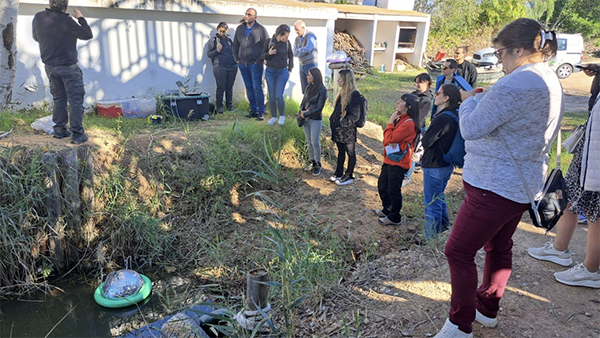
The Albufera Natural Park, one of the five wetlands studied in the Wetland4Change project, alongside sites in France, Italy, Greece, and Bulgaria, was the focus of fieldwork and training activities. On November 27, participants explored the artificial wetlands of Tancat de L’Illa and the Biological Station laboratories of Albufera. Under the guidance of researchers led by Professor Camacho, they delved into greenhouse gas (GHG) measurement techniques across various habitats and learned the key considerations for proper in-situ sampling. Participants also visited the Devesa Sud area, where, between 2003 and 2017, a large-scale renaturalization project restored beach, dune, and back-dune ecosystems.
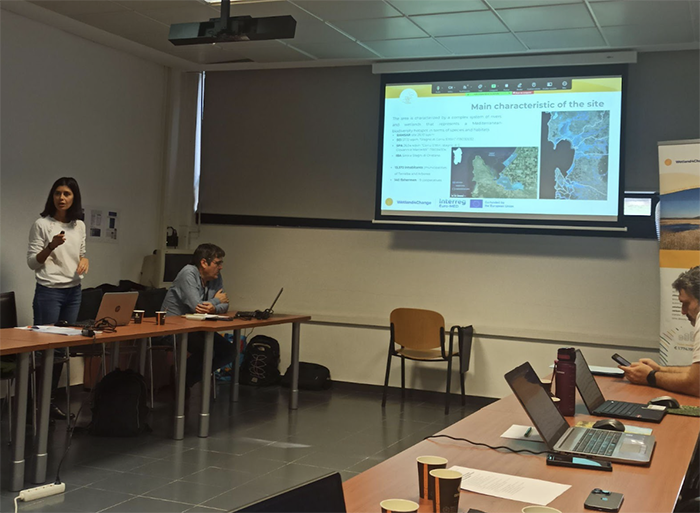
The MEDSEA team presented a mapping of data necessary for calculating carbon sequestration already available for the Marceddì wetland in Terralba, a pilot site where the Foundation will test and validate flood regulation measurement tools. Additionally, they provided updates on the progress of communication activities across the project, managed by the Foundation.
Latest news

Ocean&Climate Village comes to Cagliari for the first time: MEDSEA engages schools and university students
For the first time, the Ocean&Climate Village came to Cagliari, bringing an exhibition dedicated to ocean awareness, the ocean’s role in regulating the climate, and the protection of marine biodiversity…

Il Viaggio delle Balene: Tracce nel Blu expedition concludes after 497 nautical miles of marine biodiversity research around Sardini
The scientific expedition Tracce nel Blu – Route for Biodiversity concluded on Friday, 9 October. It marked the second edition of ** Il Viaggio delle Balene (The Whale Journey)**, a…

Tracce nel Blu 2026: the new Il Viaggio delle Balene mission has set sail
Tracce nel Blu – Route for Biodiversity has set sail: the 2026 scientific expedition of Il Viaggio delle Balene, dedicated to cetacean monitoring, Mediterranean monk seal research through environmental DNA…

MEDCONNECT launches in Limassol: MEDSEA leads two Work Packages and the Italian National Hub
Turning blue innovation into solutions that can be adopted, financed and replicated across the Mediterranean. This is the challenge at the heart of MEDCONNECT, the new Mediterranean Lighthouse of the…

After Decades on the Seabed, Ghost Net Removed off Villasimius with GhostNetBusters
120 kg of fishing nets were removed from the seabed, while a further 510 kg of nets and other fishing gear recovered during previous operations were disposed of, together with…

"GhostNetBusters”: Patagonia joins MEDSEA and the Capo Carbonara MPA to free the seabed from ghost nets
Villasimius will host “GhostNetBusters”, an environmental initiative organised by the MEDSEA Foundation in collaboration with the Capo Carbonara Marine Protected Area, with the support of Patagonia

Posidonia oceanica: First Restoration Intervention Launched in Lacco Ameno Bay, Ischia
As part of the Oasi Marina initiative promoted by Beiersdorf and announced last year, MEDSEA Foundation has completed its first Posidonia oceanica restoration intervention in Lacco Ameno Bay, on the island of Ischia. The restoration…

CRESO Project Meets in Nice: MEDSEA Presents a Roadmap from Climate Risk to Coastal Action
The Interreg Marittimo project CRESO gathered its partners in Nice on 5 June 2026 for a full-day meeting dedicated to presenting the first year of work on a cross-border approach…

Wetland4Change, from research to planning: the project’s final meeting in the Camargue
Two days of discussion on wetland-based solutions for carbon sequestration and flood risk reduction. MEDSEA presented the results from the Marceddì–San Giovanni pilot site together with representatives of the Regional…

ARTEMIS, from pilot actions to Mediterranean-scale impact: MEDSEA at the final conference in Menorca
Three days of discussion on the results of the Interreg Euro-MED project dedicated to seagrass meadow restoration. MEDSEA presented the Sardinian pilot site and the communication work that documented two…

Posidonia Restoration: 15 ARTEMIS Recommendations to Support Italy and the Mediterranean in Implementing the Nature Restoration Law
The restoration of Mediterranean seagrass meadows must move from fragmented pilot projects to long-term, large-scale action supported by coherent governance and sustainable financing, according to the new report released by…

Marco Spinelli. The power of storytelling to protect seas
For Marco Spinelli, the sea has always been home. A photographer, documentary filmmaker and explorer of the underwater world, he grew up in Sicily, where he spent his childhood exploring the…

Mona Khalil: A Life Devoted to the Sea, Cut Short by War
The voice of Mona Khalil, guardian of southern Lebanon's sea turtles, has been silenced by bombs. For more than twenty years, Mona dedicated her life to protecting sea turtles on…

El Niño: The planet's irregular heartbeat that could also affect the Mediterranean.
El Niño is one of the most important natural climate phenomena on Earth. Although it originates in the tropical Pacific Ocean, it can influence weather and climate on a global scale…

Virginia Salzedo. Finding Resilience in a Fragile Sea
For those who truly know the sea, it is not only about whales or spectacular encounters with its most iconic inhabitants. This is certainly the case for Virginia Salzedo, an internationally…

Mediterranean Seagrass Restoration Efforts Continue in Greece
Following restoration interventions in Sardinia and Malta, MEDSEA has now completed a new restoration campaign on the Greek island of Arkoudi, working alongside iSea, a Greek environmental organisation dedicated to marine…
- 1
- 2
- 3
- 4