
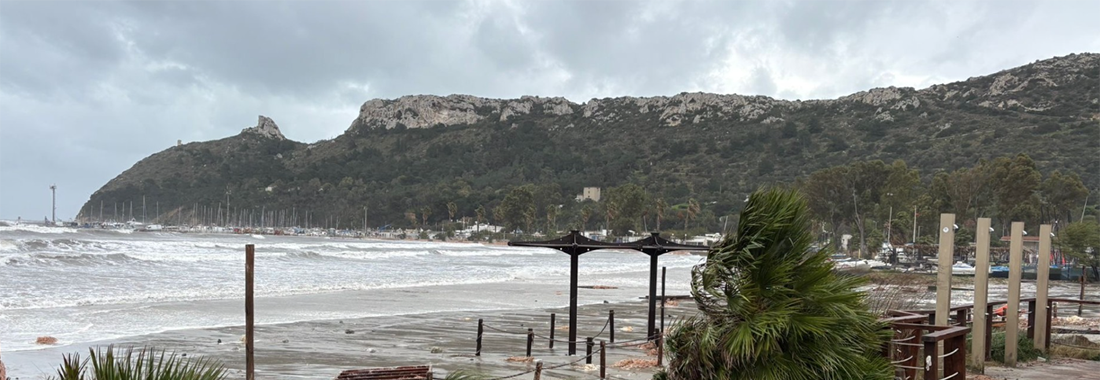
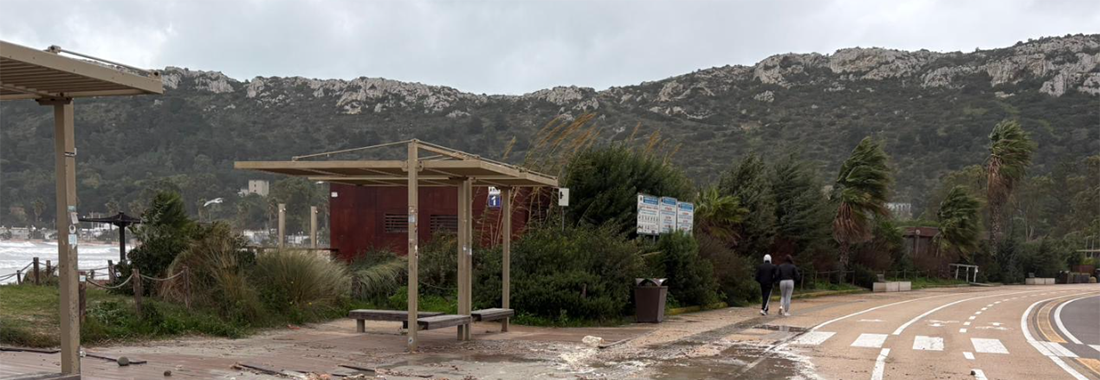
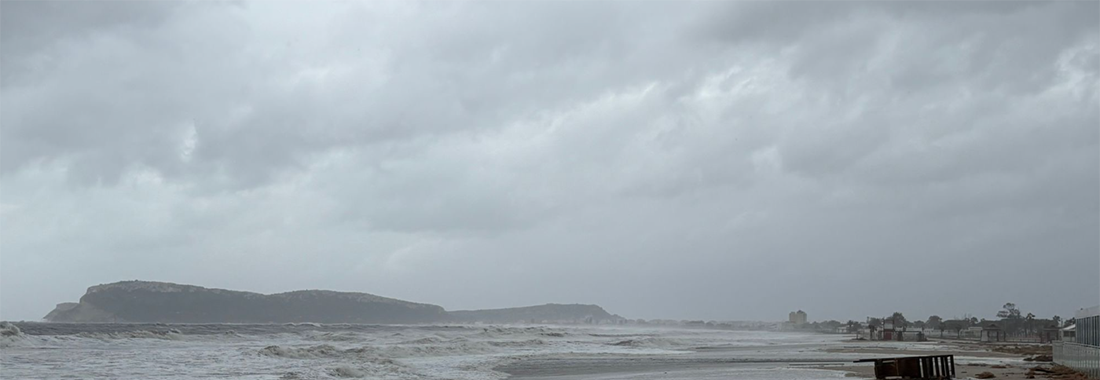
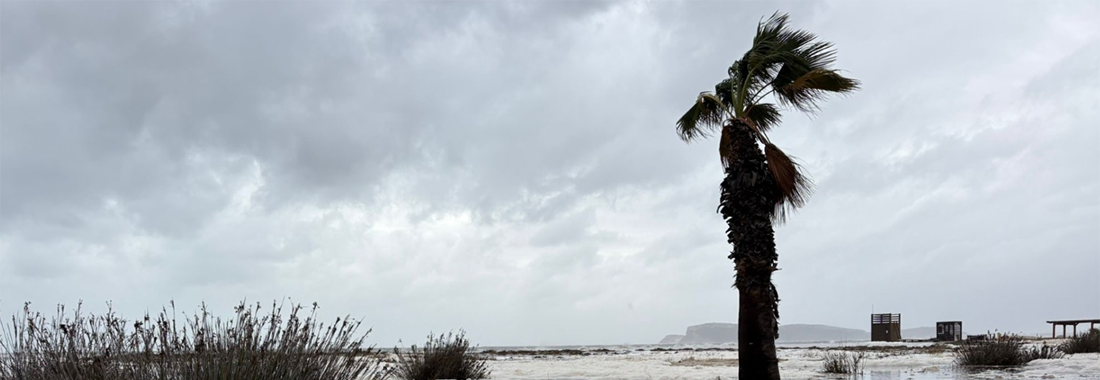
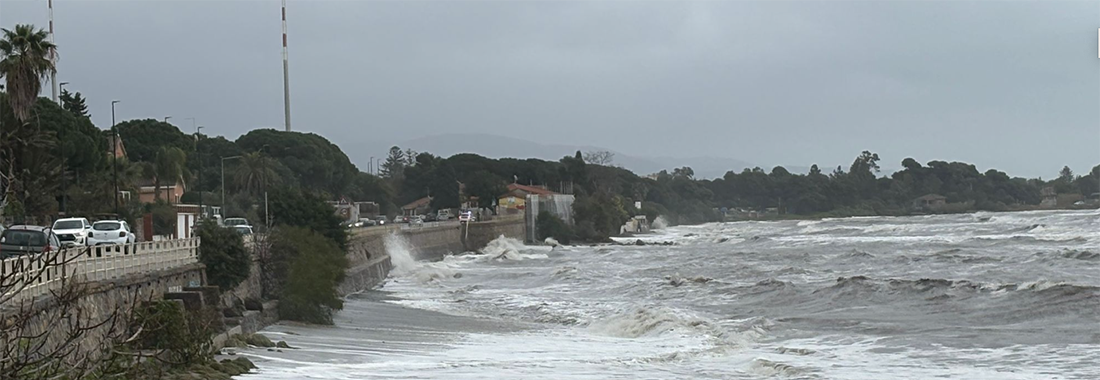
A few days after Cyclone “Harry” swept across the Mediterranean, Alessio Satta, researcher and expert at the MEDSEA Foundation, offers an overview of the situation along Sardinia’s coastline. His analysis highlights the underlying causes and the structural vulnerability of the island’s coastal system.
Watch the interview:
Sardinia has one of the longest coastlines in Italy, with roughly 2,700 kilometres of shoreline and 291 officially recorded beaches. Available data suggest that more than twenty of these sites are in a highly critical condition. In most cases, the main driver is human impact: urbanised and heavily modified beaches where rigid structures and infrastructure have reduced the coast’s natural ability to adapt.
Cyclone Harry developed in late January, fuelled by strong sirocco winds and an intense low-pressure system. After hitting Sicily, the storm severely affected the most exposed areas of Sardinia - especially the Gulf of Cagliari (from Cagliari to Domus de Maria) and the island’s eastern coast, including Sarrabus and Ogliastra. In some locations, waves exceeding four metres were recorded, triggering coastal flooding and large-scale sediment displacement.
THE KEY ROLE OF DUNES
Whether a beach can recover depends largely on how intact its natural system remains. Where functional dunes are still present and the backdune area is open, the coastline can gradually rebuild its equilibrium and recover naturally. Where dunes have been removed, blocked or replaced by rigid barriers, the impact is far more severe and recovery becomes difficult. At Poetto beach, for instance, dune restoration and protection measures helped limit damage in certain sections, while areas lacking natural defences saw heavier erosion affecting beach facilities and built structures.
There is a clear link between climate change and extreme events like this. Satta explains: “The sea is the fuel for storms”. As Mediterranean temperatures rise - on average by 1 to 2 degrees - storms draw on greater energy, increasing evaporation, moisture in the atmosphere and the intensity of storm surges. When powerful waves combine with a storm surge (a temporary rise in sea level), the impact on the coastline becomes significantly more destructive.
A STANDALONE CASE?
Events like “Harry” should not be treated as isolated episodes. They may occur less often, but they are likely to become more intense, and current trends suggest sea temperatures will not decrease in the near future. This is why MEDSEA Foundation works to raise awareness among citizens and local authorities, encouraging a more responsible approach to coastal management, based on prevention, dune system protection and interventions that respect the beaches’ natural resilience.
Latest news

Tracce nel Blu 2026: the new Il Viaggio delle Balene mission has set sail
Tracce nel Blu – Route for Biodiversity has set sail: the 2026 scientific expedition of Il Viaggio delle Balene, dedicated to cetacean monitoring, Mediterranean monk seal research through environmental DNA…

MEDCONNECT launches in Limassol: MEDSEA leads two Work Packages and the Italian National Hub
Turning blue innovation into solutions that can be adopted, financed and replicated across the Mediterranean. This is the challenge at the heart of MEDCONNECT, the new Mediterranean Lighthouse of the…

After Decades on the Seabed, Ghost Net Removed off Villasimius with GhostNetBusters
120 kg of fishing nets were removed from the seabed, while a further 510 kg of nets and other fishing gear recovered during previous operations were disposed of, together with…

"GhostNetBusters”: Patagonia joins MEDSEA and the Capo Carbonara MPA to free the seabed from ghost nets
Villasimius will host “GhostNetBusters”, an environmental initiative organised by the MEDSEA Foundation in collaboration with the Capo Carbonara Marine Protected Area, with the support of Patagonia

Posidonia oceanica: First Restoration Intervention Launched in Lacco Ameno Bay, Ischia
As part of the Oasi Marina initiative promoted by Beiersdorf and announced last year, MEDSEA Foundation has completed its first Posidonia oceanica restoration intervention in Lacco Ameno Bay, on the island of Ischia. The restoration…

CRESO Project Meets in Nice: MEDSEA Presents a Roadmap from Climate Risk to Coastal Action
The Interreg Marittimo project CRESO gathered its partners in Nice on 5 June 2026 for a full-day meeting dedicated to presenting the first year of work on a cross-border approach…

Wetland4Change, from research to planning: the project’s final meeting in the Camargue
Two days of discussion on wetland-based solutions for carbon sequestration and flood risk reduction. MEDSEA presented the results from the Marceddì–San Giovanni pilot site together with representatives of the Regional…

ARTEMIS, from pilot actions to Mediterranean-scale impact: MEDSEA at the final conference in Menorca
Three days of discussion on the results of the Interreg Euro-MED project dedicated to seagrass meadow restoration. MEDSEA presented the Sardinian pilot site and the communication work that documented two…

Posidonia Restoration: 15 ARTEMIS Recommendations to Support Italy and the Mediterranean in Implementing the Nature Restoration Law
The restoration of Mediterranean seagrass meadows must move from fragmented pilot projects to long-term, large-scale action supported by coherent governance and sustainable financing, according to the new report released by…

Marco Spinelli. The power of storytelling to protect seas
For Marco Spinelli, the sea has always been home. A photographer, documentary filmmaker and explorer of the underwater world, he grew up in Sicily, where he spent his childhood exploring the…

Mona Khalil: A Life Devoted to the Sea, Cut Short by War
The voice of Mona Khalil, guardian of southern Lebanon's sea turtles, has been silenced by bombs. For more than twenty years, Mona dedicated her life to protecting sea turtles on…

El Niño: The planet's irregular heartbeat that could also affect the Mediterranean.
El Niño is one of the most important natural climate phenomena on Earth. Although it originates in the tropical Pacific Ocean, it can influence weather and climate on a global scale…

Virginia Salzedo. Finding Resilience in a Fragile Sea
For those who truly know the sea, it is not only about whales or spectacular encounters with its most iconic inhabitants. This is certainly the case for Virginia Salzedo, an internationally…

Mediterranean Seagrass Restoration Efforts Continue in Greece
Following restoration interventions in Sardinia and Malta, MEDSEA has now completed a new restoration campaign on the Greek island of Arkoudi, working alongside iSea, a Greek environmental organisation dedicated to marine…

Greg Lecoeur: Photographing a Changing Ocean
For Greg Lecoeur, the sea has never been merely a subject to photograph. An explorer, wildlife photographer, and storyteller of the marine world, he has transformed a passion nurtured since…

World Oceans Day 2026: Looking Beneath the Surface
The ocean covers around 70% of the Earth's surface, produces more than half of the oxygen we breathe, and absorbs vast amounts of carbon dioxide and heat, helping to mitigate…
- 1
- 2
- 3
- 4