
.png)
Seagrass restoration activities continue across the Mediterranean through a programme supporting the recovery of degraded Posidonia oceanica meadows in several countries, including Italy, Malta, Greece and Türkiye.
Following restoration interventions in Sardinia and Malta, MEDSEA has now completed a new restoration campaign on the Greek island of Arkoudi, working alongside iSea, a Greek environmental organisation dedicated to marine conservation.
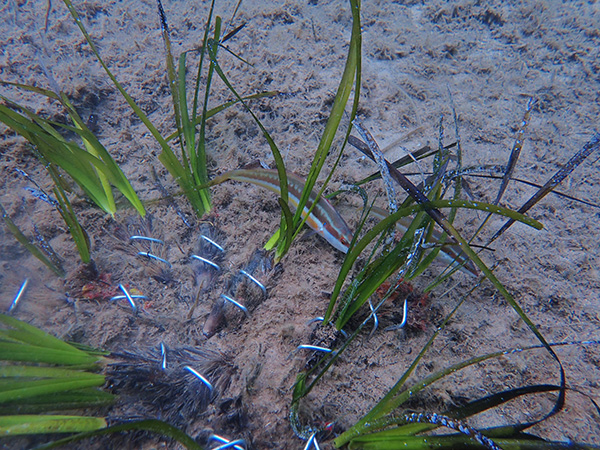
Arkoudi, one of the uninhabited islets of the Inner Ionian Archipelago, is a popular destination for recreational vessels and yachts. In recent years, unregulated anchoring has severely degraded local Posidonia oceanica meadows, leaving extensive areas of damaged habitat and numerous uprooted shoots. Despite being part of the Natura 2000 network and included in plans for the future National Marine Park of the Ionian Sea, the area remains under significant pressure from boating activities.
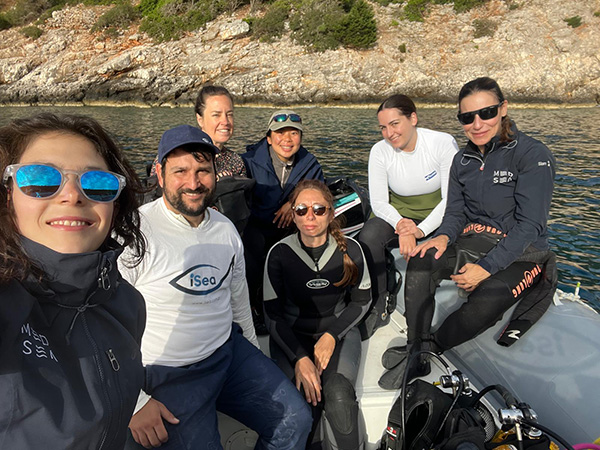
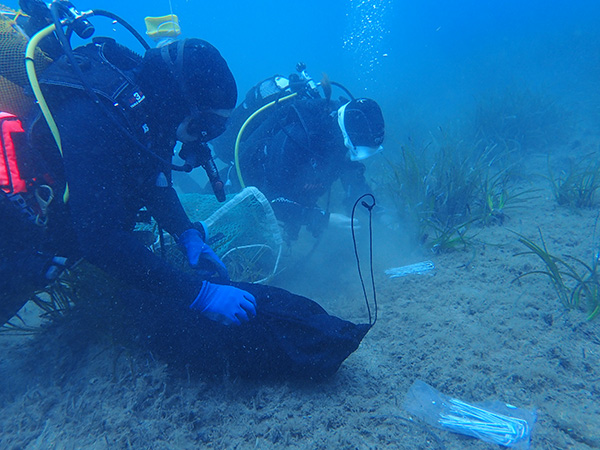
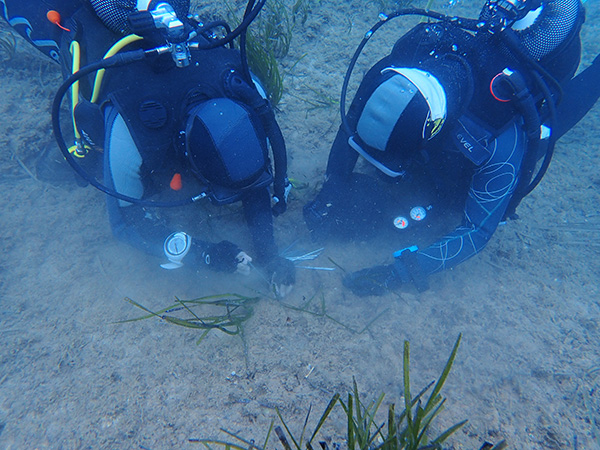
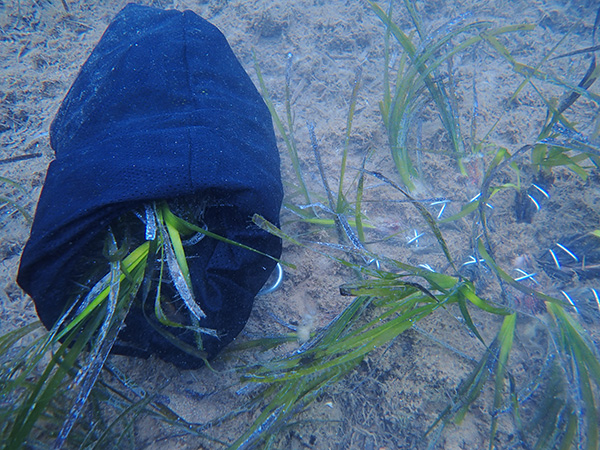
Over the course of a week last May, restoration teams transplanted approximately 2,000 Posidonia oceanica cuttings across a 200-square-metre site located at a depth of around 10 metres. The area had been significantly impacted by anchoring activities, which over time fragmented and degraded the seagrass meadow.
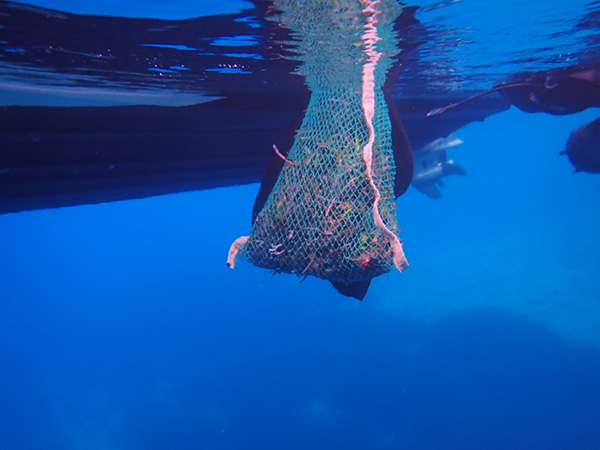
The cuttings used for the intervention were collected from shoots naturally uprooted in highly frequented boating areas. By recovering and replanting this material, the project contributes to the restoration of damaged habitats while reducing the loss of viable seagrass fragments.
The operations also attracted considerable interest from the local community. Throughout the week, residents and visitors approached the harbour to observe the preparation of the cuttings and learn more about the restoration process and the ecological importance of seagrass meadows.
“We are pleased to continue this journey across the Mediterranean together with our partners,” said Francesca Frau, Marine Restoration Programme Manager at MEDSEA. “Each restoration site presents different environmental conditions, pressures and management approaches. Working across these diverse contexts allows us to compare experiences, refine restoration methodologies and strengthen our understanding of what is needed to ensure the long-term recovery of seagrass ecosystems throughout the Mediterranean.”
However, this initiative marks only the beginning of a longer-term commitment. “Over the next three years, - added a representative from iSea - we will closely monitor the growth and survival of the transplanted shoots, generating valuable data to assess the effectiveness of restoration techniques, refine best practices, and support the development of practical guidelines for future Posidonia oceanica restoration efforts in the region.
The initiative is supported by Fondation de la Mer, a French foundation committed to biodiversity protection programmes worldwide. Through its Seagrass Programme, dedicated primarily to seagrass conservation in the Mediterranean, the foundation works with the support of CMA CGM. As the financial partner of the initiative, the CMA CGM Group—a global leader in sea, land, air and logistics solutions—supports conservation and restoration actions for fragile marine ecosystems throughout the Mediterranean and beyond.
The intervention in Arkoudi is also part of MEDSEA’s broader campaign, A Sea Forest to Save the Planet, which promotes awareness and action for the protection and restoration of Mediterranean seagrass meadows.
The next restoration activities are scheduled to take place in Türkiye at the end of June, continuing a shared effort to restore one of the Mediterranean’s most valuable marine habitats and the ecosystem services it provides to coastal communities.
Latest news

After Decades on the Seabed, Ghost Net Removed off Villasimius with GhostNetBusters
120 kg of fishing nets were removed from the seabed, while a further 510 kg of nets and other fishing gear recovered during previous operations were disposed of, together with…

"GhostNetBusters”: Patagonia joins MEDSEA and the Capo Carbonara MPA to free the seabed from ghost nets
Villasimius will host “GhostNetBusters”, an environmental initiative organised by the MEDSEA Foundation in collaboration with the Capo Carbonara Marine Protected Area, with the support of Patagonia

Posidonia oceanica: First Restoration Intervention Launched in Lacco Ameno Bay, Ischia
As part of the Oasi Marina initiative promoted by Beiersdorf and announced last year, MEDSEA Foundation has completed its first Posidonia oceanica restoration intervention in Lacco Ameno Bay, on the island of Ischia. The restoration…

CRESO Project Meets in Nice: MEDSEA Presents a Roadmap from Climate Risk to Coastal Action
The Interreg Marittimo project CRESO gathered its partners in Nice on 5 June 2026 for a full-day meeting dedicated to presenting the first year of work on a cross-border approach…

Wetland4Change, from research to planning: the project’s final meeting in the Camargue
Two days of discussion on wetland-based solutions for carbon sequestration and flood risk reduction. MEDSEA presented the results from the Marceddì–San Giovanni pilot site together with representatives of the Regional…

ARTEMIS, from pilot actions to Mediterranean-scale impact: MEDSEA at the final conference in Menorca
Three days of discussion on the results of the Interreg Euro-MED project dedicated to seagrass meadow restoration. MEDSEA presented the Sardinian pilot site and the communication work that documented two…

Posidonia Restoration: 15 ARTEMIS Recommendations to Support Italy and the Mediterranean in Implementing the Nature Restoration Law
The restoration of Mediterranean seagrass meadows must move from fragmented pilot projects to long-term, large-scale action supported by coherent governance and sustainable financing, according to the new report released by…

Marco Spinelli. The power of storytelling to protect seas
For Marco Spinelli, the sea has always been home. A photographer, documentary filmmaker and explorer of the underwater world, he grew up in Sicily, where he spent his childhood exploring the…

Mona Khalil: A Life Devoted to the Sea, Cut Short by War
The voice of Mona Khalil, guardian of southern Lebanon's sea turtles, has been silenced by bombs. For more than twenty years, Mona dedicated her life to protecting sea turtles on…

El Niño: The planet's irregular heartbeat that could also affect the Mediterranean.
El Niño is one of the most important natural climate phenomena on Earth. Although it originates in the tropical Pacific Ocean, it can influence weather and climate on a global scale…

Virginia Salzedo. Finding Resilience in a Fragile Sea
For those who truly know the sea, it is not only about whales or spectacular encounters with its most iconic inhabitants. This is certainly the case for Virginia Salzedo, an internationally…

Mediterranean Seagrass Restoration Efforts Continue in Greece
Following restoration interventions in Sardinia and Malta, MEDSEA has now completed a new restoration campaign on the Greek island of Arkoudi, working alongside iSea, a Greek environmental organisation dedicated to marine…

Greg Lecoeur: Photographing a Changing Ocean
For Greg Lecoeur, the sea has never been merely a subject to photograph. An explorer, wildlife photographer, and storyteller of the marine world, he has transformed a passion nurtured since…

World Oceans Day 2026: Looking Beneath the Surface
The ocean covers around 70% of the Earth's surface, produces more than half of the oxygen we breathe, and absorbs vast amounts of carbon dioxide and heat, helping to mitigate…

Egidio Trainito: Looking Beyond the Beauty of the Sea
For over fifty years, Egidio Trainito has observed the sea through his lens. A nature photographer, expert in sustainable tourism development, and actively involved in conservation projects within Marine Protected…

ARTEMIS Village: Three Days Dedicated to Posidonia oceanica in Santa Teresa Gallura
From 30 May to 1 June 2026, Piazza della Libertà in Santa Teresa Gallura hosted ARTEMIS Village, an educational event dedicated to the sea and the protection of Posidonia oceanica, held as…
- 1
- 2
- 3
- 4