
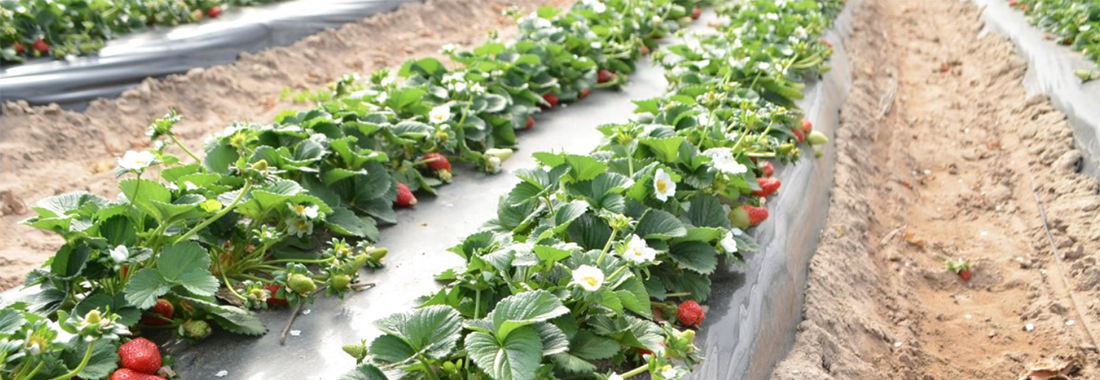
With the Re-Live Waste project, the Arborea Producers Cooperative won the award Towards a circular economy 2021, wanted by the Cogeme Foundation and Kyoto Club. Re-Live Waste was funded by the EU and is part of the Interreg MED transnational program. The project is focuses on innovative systems for the management of waste materials, with a view to a circular economy. In particular, the objective of the pilot project is the recycling of livestock effluents and their transformation into material useful for agricultural cultivation and to limit the dispersion and disposal of surplus products. Re-live is coordinated by the University of Sassari and involves four countries: Italy, Cyprus, Spain and Bosnia and Herzegovina.
The Arborea Producers Cooperative has made its fattening centers available for the installation of the systems necessary for the conversion of waste into struvite, a mineral used effectively, before sowing, as a soil conditioner. The waste includes manure and sewage, treated with biodigester to obtain the chemical reaction that generates struvite. The soil fertilizer is designed to facilitate the penetration of water into arid soils, whether clayey or sandy. This system not only limits the amount of materials to be disposed of, but favors the reuse of excess nutrients and improves the environmental and economic sustainability of agricultural businesses. “It is a highly encouraging result the one coming from the activities related to Re-Live” explains Pasqualino Tammaro, agronomist of the Cooperative, who also recalls how the plants, powered completely by photovoltaic panels placed on the stables, have a limited energy cost.
Since 1956, the Arborea Cooperative has been involved in the production of beef, fruit and vegetables and the feeding for small and large ruminants. It offers technical support to the associate companies and involves them in its research activities.
The cooperative’s dynamism has been interacting with the activities of the MEDSEA Foundation, which operates in the Gulf of Oristano since 2017 with the Maristanis project, focused on the conservation and sustainable development of the six Ramsar sites enclosing the gulf: "We live in continuity and contiguity with MEDSEA. Arborea is surrounded by wetlands and an interaction between the two is strictly essential", says Tammaro.
MEDSEA and the Cooperative also collaborate in the PRISMA project, funded by the Research & Development Program for Complex Projects, Agroindustry sector. The purpose of the initiative is the reuse of slaughtering leftovers and the sustainability of the agricultural cultivation system through the creation of earthworm compost, an excellent bio-stimulating fertilizer. "The slaughtering waste, after treatment, is added to the breading base, made up of soil and manure" explains Tammaro. The colonies of the small earthworms do the rest, providing an excellent synthetic peat. Earthworm compost has been recognized in the E.U lists of Natural Biologics and today it is possible to involve this new plan into the actual production, in order to “enhance these waste and give them an economic value”, states Tammaro. The project partners of PRISMA are the University of Sassari, the Experimental Zooprophylactic Institute of Sardinia, and Bioss Srl.
“The award is just a starting point” says Tammaro, who adds: “From these results comes the need to reproduce the model on a larger scale. We also have to save some energy energy for the experimental projects we’ve planned for 2022. The collaboration with MEDSEA will be very important. We are convinced that the goal can only be achieved through mutual exchange and associated work".
Latest news

Tracce nel Blu 2026: the new Il Viaggio delle Balene mission has set sail
Tracce nel Blu – Route for Biodiversity has set sail: the 2026 scientific expedition of Il Viaggio delle Balene, dedicated to cetacean monitoring, Mediterranean monk seal research through environmental DNA…

MEDCONNECT launches in Limassol: MEDSEA leads two Work Packages and the Italian National Hub
Turning blue innovation into solutions that can be adopted, financed and replicated across the Mediterranean. This is the challenge at the heart of MEDCONNECT, the new Mediterranean Lighthouse of the…

After Decades on the Seabed, Ghost Net Removed off Villasimius with GhostNetBusters
120 kg of fishing nets were removed from the seabed, while a further 510 kg of nets and other fishing gear recovered during previous operations were disposed of, together with…

"GhostNetBusters”: Patagonia joins MEDSEA and the Capo Carbonara MPA to free the seabed from ghost nets
Villasimius will host “GhostNetBusters”, an environmental initiative organised by the MEDSEA Foundation in collaboration with the Capo Carbonara Marine Protected Area, with the support of Patagonia

Posidonia oceanica: First Restoration Intervention Launched in Lacco Ameno Bay, Ischia
As part of the Oasi Marina initiative promoted by Beiersdorf and announced last year, MEDSEA Foundation has completed its first Posidonia oceanica restoration intervention in Lacco Ameno Bay, on the island of Ischia. The restoration…

CRESO Project Meets in Nice: MEDSEA Presents a Roadmap from Climate Risk to Coastal Action
The Interreg Marittimo project CRESO gathered its partners in Nice on 5 June 2026 for a full-day meeting dedicated to presenting the first year of work on a cross-border approach…

Wetland4Change, from research to planning: the project’s final meeting in the Camargue
Two days of discussion on wetland-based solutions for carbon sequestration and flood risk reduction. MEDSEA presented the results from the Marceddì–San Giovanni pilot site together with representatives of the Regional…

ARTEMIS, from pilot actions to Mediterranean-scale impact: MEDSEA at the final conference in Menorca
Three days of discussion on the results of the Interreg Euro-MED project dedicated to seagrass meadow restoration. MEDSEA presented the Sardinian pilot site and the communication work that documented two…

Posidonia Restoration: 15 ARTEMIS Recommendations to Support Italy and the Mediterranean in Implementing the Nature Restoration Law
The restoration of Mediterranean seagrass meadows must move from fragmented pilot projects to long-term, large-scale action supported by coherent governance and sustainable financing, according to the new report released by…

Marco Spinelli. The power of storytelling to protect seas
For Marco Spinelli, the sea has always been home. A photographer, documentary filmmaker and explorer of the underwater world, he grew up in Sicily, where he spent his childhood exploring the…

Mona Khalil: A Life Devoted to the Sea, Cut Short by War
The voice of Mona Khalil, guardian of southern Lebanon's sea turtles, has been silenced by bombs. For more than twenty years, Mona dedicated her life to protecting sea turtles on…

El Niño: The planet's irregular heartbeat that could also affect the Mediterranean.
El Niño is one of the most important natural climate phenomena on Earth. Although it originates in the tropical Pacific Ocean, it can influence weather and climate on a global scale…

Virginia Salzedo. Finding Resilience in a Fragile Sea
For those who truly know the sea, it is not only about whales or spectacular encounters with its most iconic inhabitants. This is certainly the case for Virginia Salzedo, an internationally…

Mediterranean Seagrass Restoration Efforts Continue in Greece
Following restoration interventions in Sardinia and Malta, MEDSEA has now completed a new restoration campaign on the Greek island of Arkoudi, working alongside iSea, a Greek environmental organisation dedicated to marine…

Greg Lecoeur: Photographing a Changing Ocean
For Greg Lecoeur, the sea has never been merely a subject to photograph. An explorer, wildlife photographer, and storyteller of the marine world, he has transformed a passion nurtured since…

World Oceans Day 2026: Looking Beneath the Surface
The ocean covers around 70% of the Earth's surface, produces more than half of the oxygen we breathe, and absorbs vast amounts of carbon dioxide and heat, helping to mitigate…
- 1
- 2
- 3
- 4