
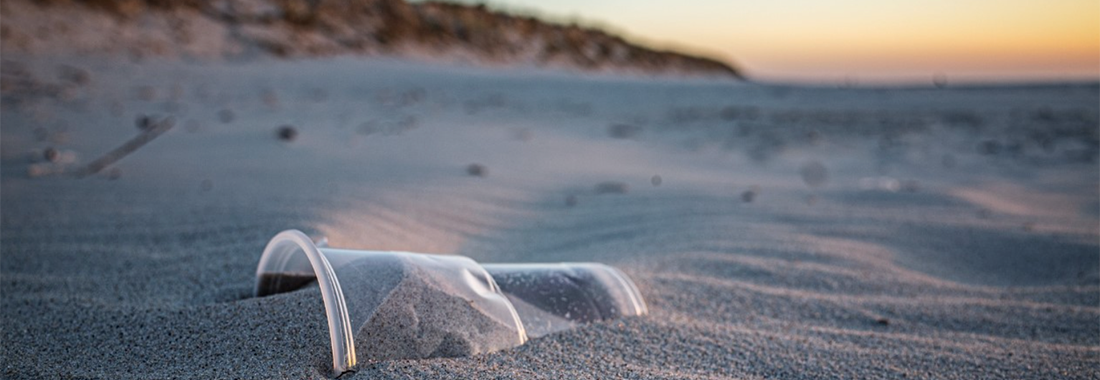
On January 14, 2022, the ban on placing single-use plastic products for consumption came into force. The date is relevant.
The prohibition is contained in Article 5 of Legislative Decree 196/2021 and concerns the so-called "Sup-single use plastics" products referred to in Directive (EU) 2019/904 (including cotton buds; cutlery, plates, straws, drink stirrers, expanded polystyrene food containers, etc.) all including oxodegradable plastic products (for instance, chemical additives for fragmentation). The sale of these products is allowed only until stocks are exhausted and only if it can be demonstrated that the acquisition is prior to the entry into force of the aforementioned prohibition.
The sale of biodegradable and compostable products, on the other hand, complying with the Uni En 13432 or Uni En 14995 standards with percentages of renewable raw materials equal to or greater than 40% (from 2024 it will become 60%) is allowed.
There are pecuniary administrative penalties (from 2,500 euros to 25,000 euros) for placing on the market or making available prohibited products, for those who place on the market or make available products that have different characteristics from those prescribed or that are the privilege of marking requirements.
In 2019, in the absence of environmental legislation, the MEDSEA Foundation launched the "Bars for the Sea" program with the aim of reducing the impact of bar and restaurant situations on Mediterranean beaches. The first recipients of the program were the bar-restaurants of the Poetto beach in Cagliari. By joining the #BarsForTheSea initiative, the bars are committed to fighting the pollution of marine bottles and making their own contribution to the protection of the marine ecosystems of the Mediterranean, implementing specific improvement actions including: progressive elimination of take-away plastic bottles with bottles of other materials and availability at the point of sale of steel or aluminum water bottles; ban on the use of plates, straws, mixers, cutlery and bags in plastic and non-biodegradable materials (to be replaced with objects in metal, ceramic or reusable bags); limitation of the sale of products with excessive packaging (ice cream in bulk, packaged fruit juices), by favoring the offer of fresh juices, centrifuges and smoothies of products; Annual increase of the returnable vacuum tool for the reuse of beer and water bottles.
The result of the initiative was excellent: in just 3 months, 3.5 tons of plastic were saved, equal to 91 thousand cubic meters. To give a visual measure of the operation, the formation of a plastic island equal to 36 square kilometers, larger than the surface of La Maddalena and Caprera in the north of Sardinia, was avoided.
Certainly, this legislation will contribute considerably to reduce the amount of waste that every year dumps into the sea but the problem is not solved yet. The models of production, service delivery and consumption, the engineering of packaging and materials will have to be rethought, and this will be the great challenge of this decade. Although the industry has already shown willingness to activate an industrial transformation in line with ecological one, some difficulties in terms of costs and realignment between supply and demand will have to be addressed.
In the meantime MEDSEA will continue with awareness-raising activities, such as Clean up on the beach and on the coasts with citizens and schools, such as the recent Puliamo la Sella and Plastic Hunt, and with #BarfortheSea together with small businesses, and to monitor the state of health of our sea.
Because the most important change can also and above all be cultural and in our daily habits.
Piera Pala
Avvocato in diritto ambientale e co-founder MEDSEA
Latest news

Tracce nel Blu 2026: the new Il Viaggio delle Balene mission has set sail
Tracce nel Blu – Route for Biodiversity has set sail: the 2026 scientific expedition of Il Viaggio delle Balene, dedicated to cetacean monitoring, Mediterranean monk seal research through environmental DNA…

MEDCONNECT launches in Limassol: MEDSEA leads two Work Packages and the Italian National Hub
Turning blue innovation into solutions that can be adopted, financed and replicated across the Mediterranean. This is the challenge at the heart of MEDCONNECT, the new Mediterranean Lighthouse of the…

After Decades on the Seabed, Ghost Net Removed off Villasimius with GhostNetBusters
120 kg of fishing nets were removed from the seabed, while a further 510 kg of nets and other fishing gear recovered during previous operations were disposed of, together with…

"GhostNetBusters”: Patagonia joins MEDSEA and the Capo Carbonara MPA to free the seabed from ghost nets
Villasimius will host “GhostNetBusters”, an environmental initiative organised by the MEDSEA Foundation in collaboration with the Capo Carbonara Marine Protected Area, with the support of Patagonia

Posidonia oceanica: First Restoration Intervention Launched in Lacco Ameno Bay, Ischia
As part of the Oasi Marina initiative promoted by Beiersdorf and announced last year, MEDSEA Foundation has completed its first Posidonia oceanica restoration intervention in Lacco Ameno Bay, on the island of Ischia. The restoration…

CRESO Project Meets in Nice: MEDSEA Presents a Roadmap from Climate Risk to Coastal Action
The Interreg Marittimo project CRESO gathered its partners in Nice on 5 June 2026 for a full-day meeting dedicated to presenting the first year of work on a cross-border approach…

Wetland4Change, from research to planning: the project’s final meeting in the Camargue
Two days of discussion on wetland-based solutions for carbon sequestration and flood risk reduction. MEDSEA presented the results from the Marceddì–San Giovanni pilot site together with representatives of the Regional…

ARTEMIS, from pilot actions to Mediterranean-scale impact: MEDSEA at the final conference in Menorca
Three days of discussion on the results of the Interreg Euro-MED project dedicated to seagrass meadow restoration. MEDSEA presented the Sardinian pilot site and the communication work that documented two…

Posidonia Restoration: 15 ARTEMIS Recommendations to Support Italy and the Mediterranean in Implementing the Nature Restoration Law
The restoration of Mediterranean seagrass meadows must move from fragmented pilot projects to long-term, large-scale action supported by coherent governance and sustainable financing, according to the new report released by…

Marco Spinelli. The power of storytelling to protect seas
For Marco Spinelli, the sea has always been home. A photographer, documentary filmmaker and explorer of the underwater world, he grew up in Sicily, where he spent his childhood exploring the…

Mona Khalil: A Life Devoted to the Sea, Cut Short by War
The voice of Mona Khalil, guardian of southern Lebanon's sea turtles, has been silenced by bombs. For more than twenty years, Mona dedicated her life to protecting sea turtles on…

El Niño: The planet's irregular heartbeat that could also affect the Mediterranean.
El Niño is one of the most important natural climate phenomena on Earth. Although it originates in the tropical Pacific Ocean, it can influence weather and climate on a global scale…

Virginia Salzedo. Finding Resilience in a Fragile Sea
For those who truly know the sea, it is not only about whales or spectacular encounters with its most iconic inhabitants. This is certainly the case for Virginia Salzedo, an internationally…

Mediterranean Seagrass Restoration Efforts Continue in Greece
Following restoration interventions in Sardinia and Malta, MEDSEA has now completed a new restoration campaign on the Greek island of Arkoudi, working alongside iSea, a Greek environmental organisation dedicated to marine…

Greg Lecoeur: Photographing a Changing Ocean
For Greg Lecoeur, the sea has never been merely a subject to photograph. An explorer, wildlife photographer, and storyteller of the marine world, he has transformed a passion nurtured since…

World Oceans Day 2026: Looking Beneath the Surface
The ocean covers around 70% of the Earth's surface, produces more than half of the oxygen we breathe, and absorbs vast amounts of carbon dioxide and heat, helping to mitigate…
- 1
- 2
- 3
- 4